
Stilpnogaster aemula
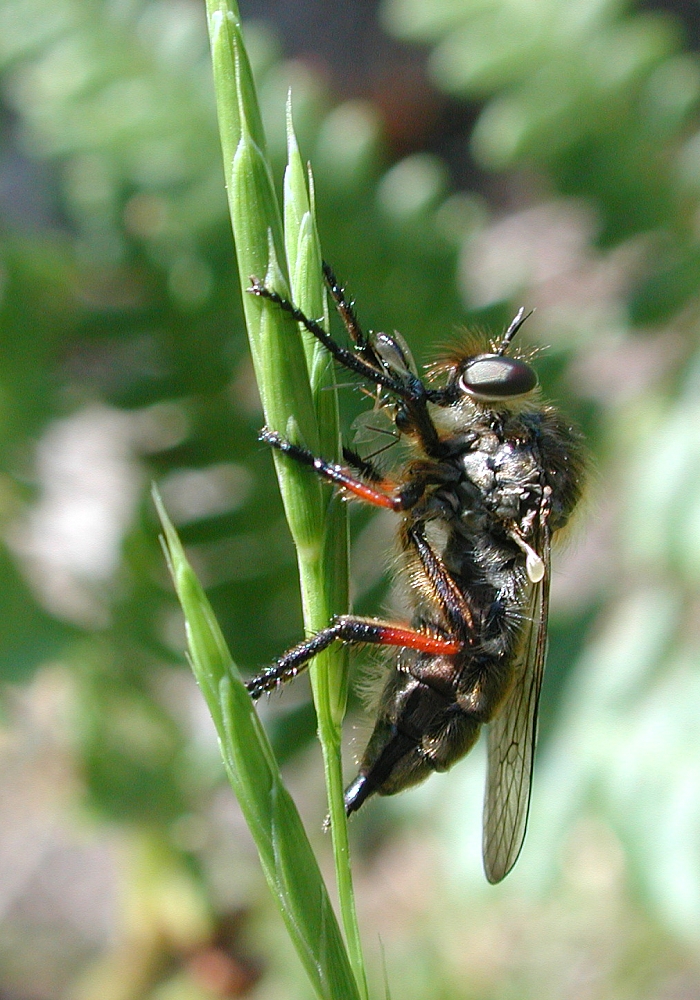
Photo: Wikimedia Commons (CC) via https://en.wikipedia.org/wiki/Stilpnogaster_aemula
Overview
Stilpnogaster aemula is a species of 'stiletto flies' belonging to the family Asilidae.
Stilpnogaster aemula, the blankbaksrovfluga, faces severe population decline primarily due to habitat loss from agricultural expansion and urban development in its limited range. The species' specialized ecological requirements and small population size make it extremely vulnerable to environmental changes and human disturbance.
Habitat
This species is present in part of Europe (Austria, Czech Republic, France, Germany, Italy, Poland, Romania, Slovakia, Sweden, former Yugoslavia and Switzerland).
==Description== Stilpnogaster aemula can reach a body length of about . Face is covered with pubescence and shows a narrow shiny longitudinal marking. Tergites and sternites are shiny black, with tomentose hind margins of each...
Other threatened species in Asilidae


Threatened in Albania

Frequently asked questions
Why is Stilpnogaster aemula classified as Critically Endangered?
Where does Stilpnogaster aemula live?
What are the main threats to Stilpnogaster aemula?
Get weekly conservation intelligence
One short digest a week of the most striking species and country data we ship, plus breaking conservation news paired with our database where it matters.
Free, no spam. One-click unsubscribe in every email.