
Black Woodpecker
Dryocopus martius
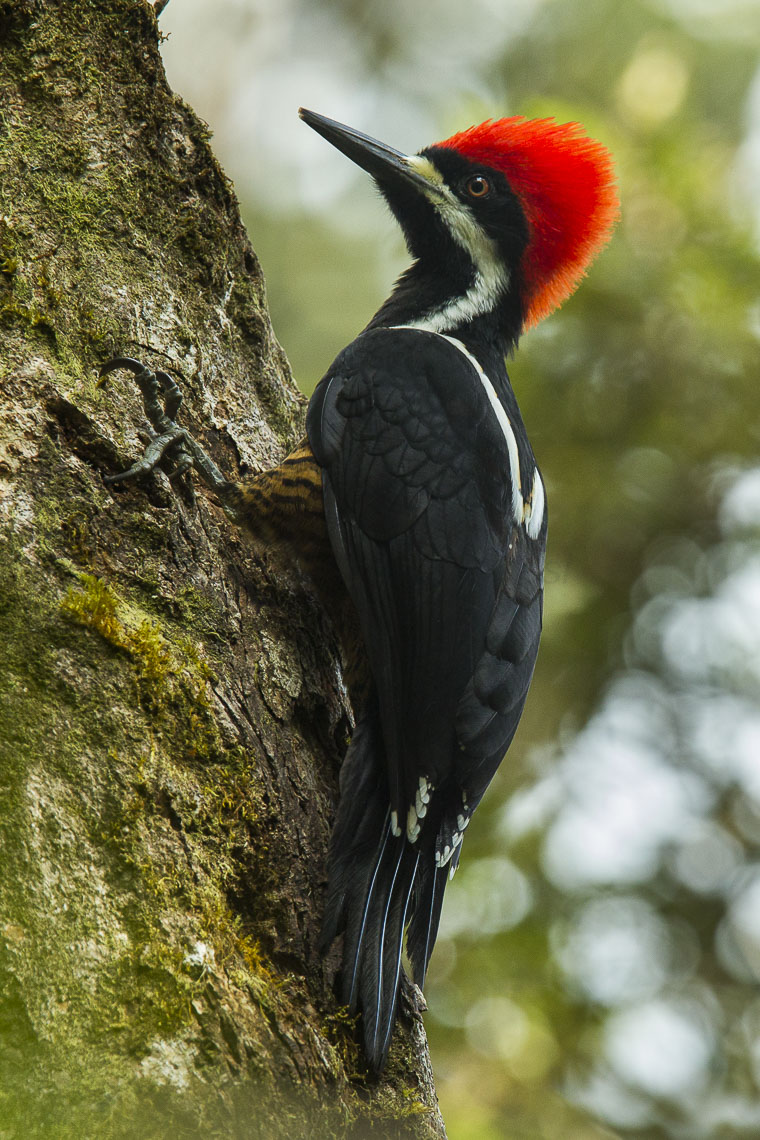
Photo: Wikimedia Commons (CC) via https://en.wikipedia.org/wiki/Black_woodpecker
Overview
The black woodpecker is a large woodpecker that lives in mature forests across the northern Palearctic. It is the sole representative of its genus in that region, and its range is expanding. The black woodpecker is easily the largest woodpecker species in Europe as well as in the portion of Asia where it lives and is one of the largest species worldwide.
This non-migratory species tends to make its home in old-growth forest or large forest stands and excavates a large tree hole to reside in. In turn, several species rely on black woodpeckers to secondarily reside in the holes made in trees by them. This woodpecker's diet consists mostly of carpenter ants.
This species is closely related to, and fills the same ecological niche in Europe as, the pileated woodpecker of North America and the...
The Black Woodpecker faces significant pressure from widespread deforestation and intensive forest management practices that remove the large, mature trees essential for nesting and foraging. Climate change is altering forest composition and reducing suitable habitat, while fragmentation isolates populations and limits genetic exchange across its range.
Habitat
Mature coniferous and mixed forests with large trees, particularly favoring old-growth stands with abundant dead wood for nesting cavities. Requires extensive forest territories with minimal human disturbance, typically in montane and boreal forest ecosystems.
Other threatened species in Picidae


Frequently asked questions
Why is Black Woodpecker classified as Vulnerable?
Where does Black Woodpecker live?
What are the main threats to Black Woodpecker?
Get weekly conservation intelligence
One short digest a week of the most striking species and country data we ship, plus breaking conservation news paired with our database where it matters.
Free, no spam. One-click unsubscribe in every email.