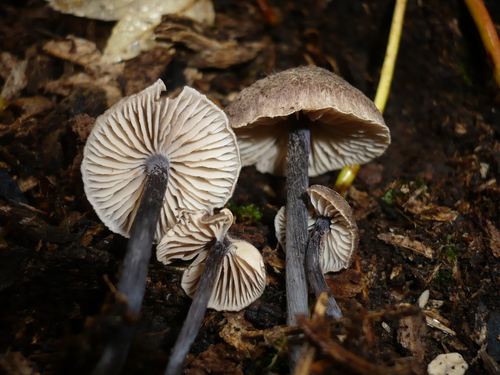
Bicoloured Pinkgill
Entoloma dichroum
Photo: iNaturalist: (c) anonymous, some rights reserved (CC BY-SA)
Overview
The Bicoloured Pinkgill is a distinctive mushroom species characterized by its cap that displays contrasting colors and pink-tinged gills that develop as spores mature. This saprotrophic fungus plays a crucial ecological role in forest ecosystems by decomposing organic matter and recycling nutrients back into the soil. It typically forms small, scattered fruiting bodies in woodland environments during autumn months.
The Bicoloured Pinkgill faces significant threats from habitat degradation and loss of suitable woodland environments due to deforestation, agricultural expansion, and urban development. Climate change and pollution are further impacting the delicate ecological conditions required for this fungal species to thrive, while overcollection in some regions may be reducing local populations.
Habitat
This species typically inhabits deciduous and mixed woodlands, particularly in areas with rich, moist soils and abundant leaf litter. It is commonly found in association with broadleaf trees and thrives in undisturbed forest environments with stable moisture and temperature conditions.
Other threatened species in Entolomataceae

Frequently asked questions
Why is Bicoloured Pinkgill classified as Vulnerable?
Where does Bicoloured Pinkgill live?
What are the main threats to Bicoloured Pinkgill?
Get weekly conservation intelligence
One short digest a week of the most striking species and country data we ship, plus breaking conservation news paired with our database where it matters.
Free, no spam. One-click unsubscribe in every email.