
Dutchman's Pipe
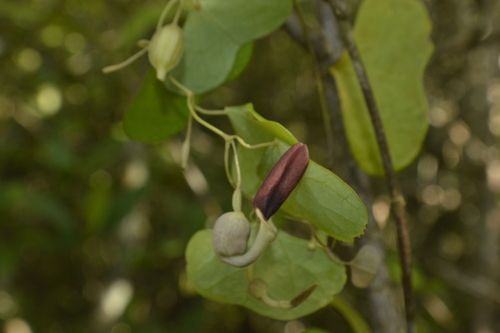
Aristolochia trilobata
Photo: Wikimedia Commons (CC) via https://en.wikipedia.org/wiki/Aristolochia_trilobata
Overview
Aristolochia trilobata, commonly known as contribo or Bejuco de Santiago, is a perennial herb in the Dutchman's pipe family Aristolochiaceae. A.trilobata is endemic to the Caribbean and is found in both Central America and South America.
Aristolochia trilobata faces severe population decline primarily due to habitat destruction from agricultural expansion and urban development in its native range. Deforestation and land conversion for cattle ranching and crop cultivation have fragmented remaining populations, while climate change may be altering suitable habitat conditions.
Habitat
Aristolochia trilobata is a tropical plant native to the Caribbean. Its populations extend from Mexico to Brazil and grows best in a wet, tropical climate. Geographic range of Aristolochia trilobata throughout the Caribbean (IUCN)
Other threatened species in Aristolochiaceae
Frequently asked questions
Why is Dutchman's Pipe classified as Critically Endangered?
Where does Dutchman's Pipe live?
What are the main threats to Dutchman's Pipe?
Get weekly conservation intelligence
One short digest a week of the most striking species and country data we ship, plus breaking conservation news paired with our database where it matters.
Free, no spam. One-click unsubscribe in every email.