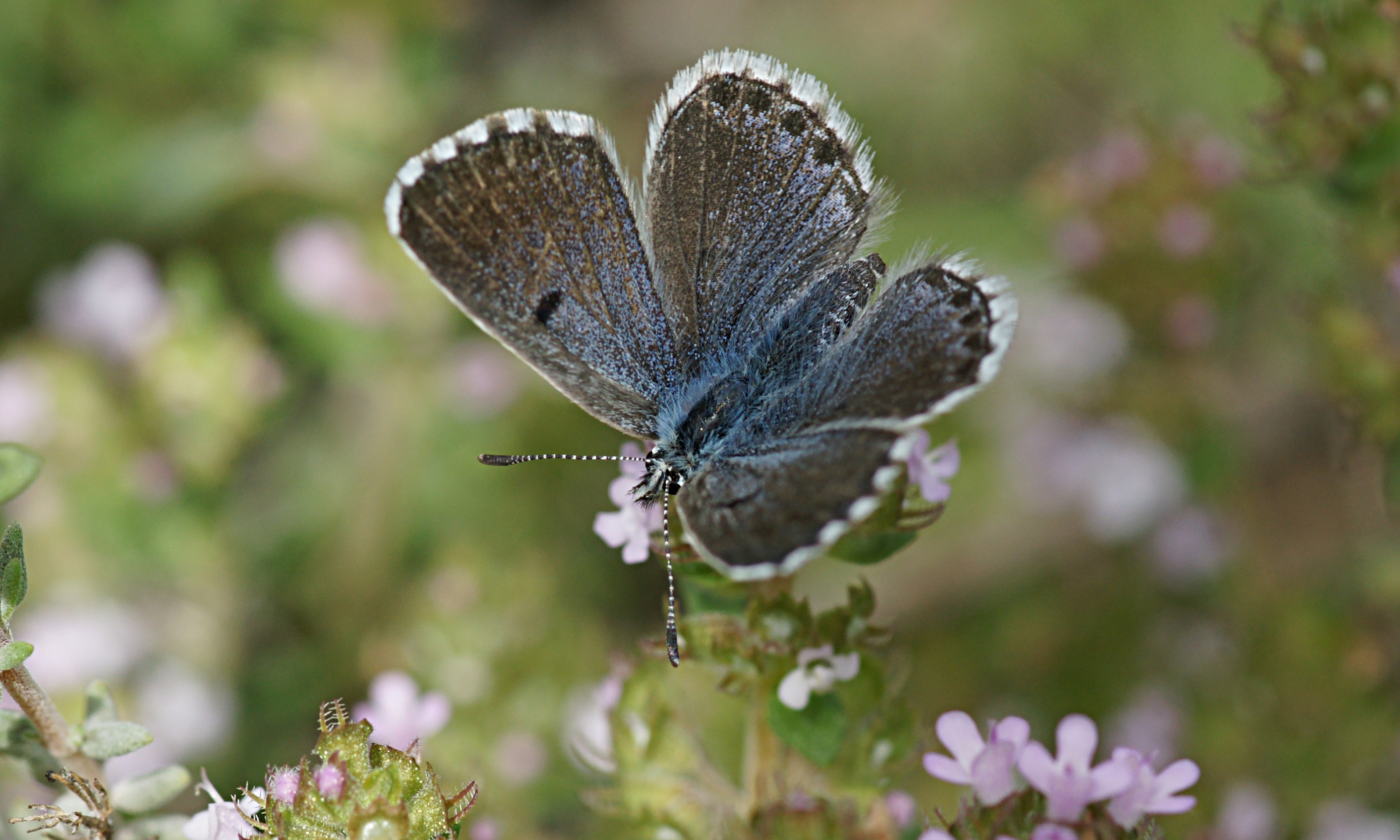
Baton Blue
Pseudophilotes baton
Photo: Wikimedia Commons (CC) via https://en.wikipedia.org/wiki/Pseudophilotes_baton
Overview
Pseudophilotes baton, the baton blue, is a butterfly belonging to the Lycaenidae family. It is found in central and southern Europe and then east across the Palearctic to the Russian Far East.
The Baton Blue butterfly faces significant threats from habitat loss and fragmentation due to agricultural intensification, urbanization, and changes in traditional land management practices. Climate change poses additional risks by altering the distribution and phenology of its host plants and affecting the delicate ecological relationships this specialized species depends upon.
Habitat
Inhabits dry calcareous grasslands, limestone slopes, rocky hillsides, and Mediterranean scrubland where its host plants in the genus Acantholimon occur. Typically found in mountainous regions and upland areas with sparse vegetation and well-drained soils.
Other threatened species in Lycaenidae


Threatened in Afghanistan

Frequently asked questions
Why is Baton Blue classified as Vulnerable?
Where does Baton Blue live?
What are the main threats to Baton Blue?
Get weekly conservation intelligence
One short digest a week of the most striking species and country data we ship, plus breaking conservation news paired with our database where it matters.
Free, no spam. One-click unsubscribe in every email.