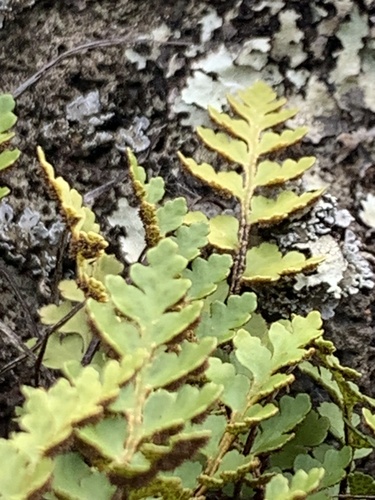
Barn Fern
Asplenium haughtonii
Photo: Photo: (c) Hanno Schaefer, all rights reserved, uploaded by Hanno Schaefer
Overview
Asplenium haughtonii is a critically endangered fern endemic to the remote islands of the South Atlantic. This delicate epiphytic species displays the characteristic feathery fronds typical of spleenworts, with pinnate leaves that can reach 15-25 centimeters in length. The fronds emerge in distinctive clusters from rocky crevices and cliff faces, creating small but striking colonies against the stark volcanic landscape.
Found exclusively on Ascension Island, this rare fern occupies a highly specialized niche within the island's unique ecosystem, thriving in the humid microclimates created by persistent cloud cover at higher elevations. The species demonstrates remarkable adaptation to the island's harsh conditions, with its rhizomes anchoring firmly into basaltic rock formations where organic matter accumulates in narrow fissures. Asplenium haughtonii is classified as Critically Endangered by the IUCN, reflecting its extremely limited distribution and ongoing population decline.
The species faces mounting pressure from invasive plant species that alter the delicate moisture balance essential for its survival, while climate variability threatens the consistent cloud forest conditions it requires. Current population estimates suggest fewer than 500 mature individuals remain across several fragmented sites. However, recent conservation efforts have shown promise, with successful propagation trials conducted by the Royal Botanic Gardens, Kew, demonstrating the species' potential for recovery through careful cultivation and habitat restoration.
Local conservation groups have also established monitoring protocols to track population changes and protect critical habitat areas from further degradation.
The primary threat to Asplenium haughtonii stems from invasive plant species, particularly aggressive grasses and shrubs that alter soil chemistry and compete for the limited moisture resources essential to this specialized fern. Climate change poses an additional significant risk by disrupting the consistent cloud cover patterns that maintain the humid microclimates where the species thrives. Habitat degradation from human activities and the introduction of non-native species continues to fragment the already limited suitable habitat across Ascension Island.
Habitat
Asplenium haughtonii inhabits rocky cliff faces and volcanic crevices in the cloud forest zone of Ascension Island, typically at elevations between 400-800 meters where persistent moisture from fog and cloud cover creates suitable growing conditions. The species requires the specific microclimate conditions found in narrow rock fissures where organic matter accumulates and humidity levels remain consistently high.
Conservation measures underway
Other threatened species in ASPLENIACEAE
Threatened in St. Helena

Frequently asked questions
Why is Barn Fern classified as Critically Endangered?
Where does Barn Fern live?
What are the main threats to Barn Fern?
Get weekly conservation intelligence
One short digest a week of the most striking species and country data we ship, plus breaking conservation news paired with our database where it matters.
Free, no spam. One-click unsubscribe in every email.