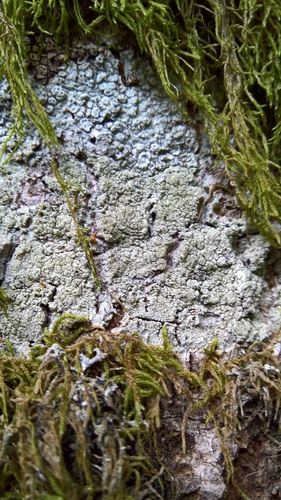
Pertusaria coronata
Photo: iNaturalist: (c) Simone Barbaresco, some rights reserved (CC BY-NC), uploaded by Simone Barbaresco
Overview
Bark-prikvortelav (Pertusaria coronata)
Bark-prikvortelav is a crustose lichen species characterized by its thick, warty thallus that forms distinctive crown-like structures on bark surfaces. This slow-growing organism represents a symbiotic partnership between fungi and photosynthetic algae, playing a crucial role in forest ecosystems by contributing to nutrient cycling and providing microhabitats for invertebrates. Like other lichens, it serves as an indicator of air quality and ecosystem health.
This terrestrial lichen grows exclusively on tree bark in specific forest environments. Its geographic distribution appears highly restricted, though detailed range mapping remains incomplete. The species requires particular microclimatic conditions and host tree species to establish and persist, making it vulnerable to environmental changes.
The critically endangered status reflects severe population declines, though the specific threats driving this decline require further assessment. Climate change likely poses significant risks through altered temperature and precipitation patterns that disrupt the delicate balance required for lichen survival. Forest fragmentation and changes in forest management practices may also impact suitable habitat availability.
Air pollution, particularly nitrogen deposition and acid rain, can severely affect lichen communities.
Current conservation efforts for this species are limited, reflecting broader challenges in lichen conservation. Research initiatives focus on population surveys and habitat requirements assessment. Some populations may receive indirect protection through forest conservation programs, though species-specific management plans are not widely implemented.
The outlook for Bark-prikvortelav remains uncertain. Without comprehensive threat assessment and targeted conservation measures, populations may continue declining. The species' slow growth rate and specific habitat requirements make recovery particularly challenging.
The threats to Bark-prikvortelav (Pertusaria coronata) have not been assessed or documented by scientists yet. Without this assessment, it's unclear what specific dangers this species faces or how human activities might be affecting its survival. The status of threats to this species cannot be determined until a proper scientific evaluation is completed.
Habitat
Other threatened species in Pertusariaceae
Frequently asked questions
Why is Pertusaria coronata classified as Critically Endangered?
Where does Pertusaria coronata live?
What are the main threats to Pertusaria coronata?
Get weekly conservation intelligence
One short digest a week of the most striking species and country data we ship, plus breaking conservation news paired with our database where it matters.
Free, no spam. One-click unsubscribe in every email.