Barbados Skink
Alinea lanceolata
Overview
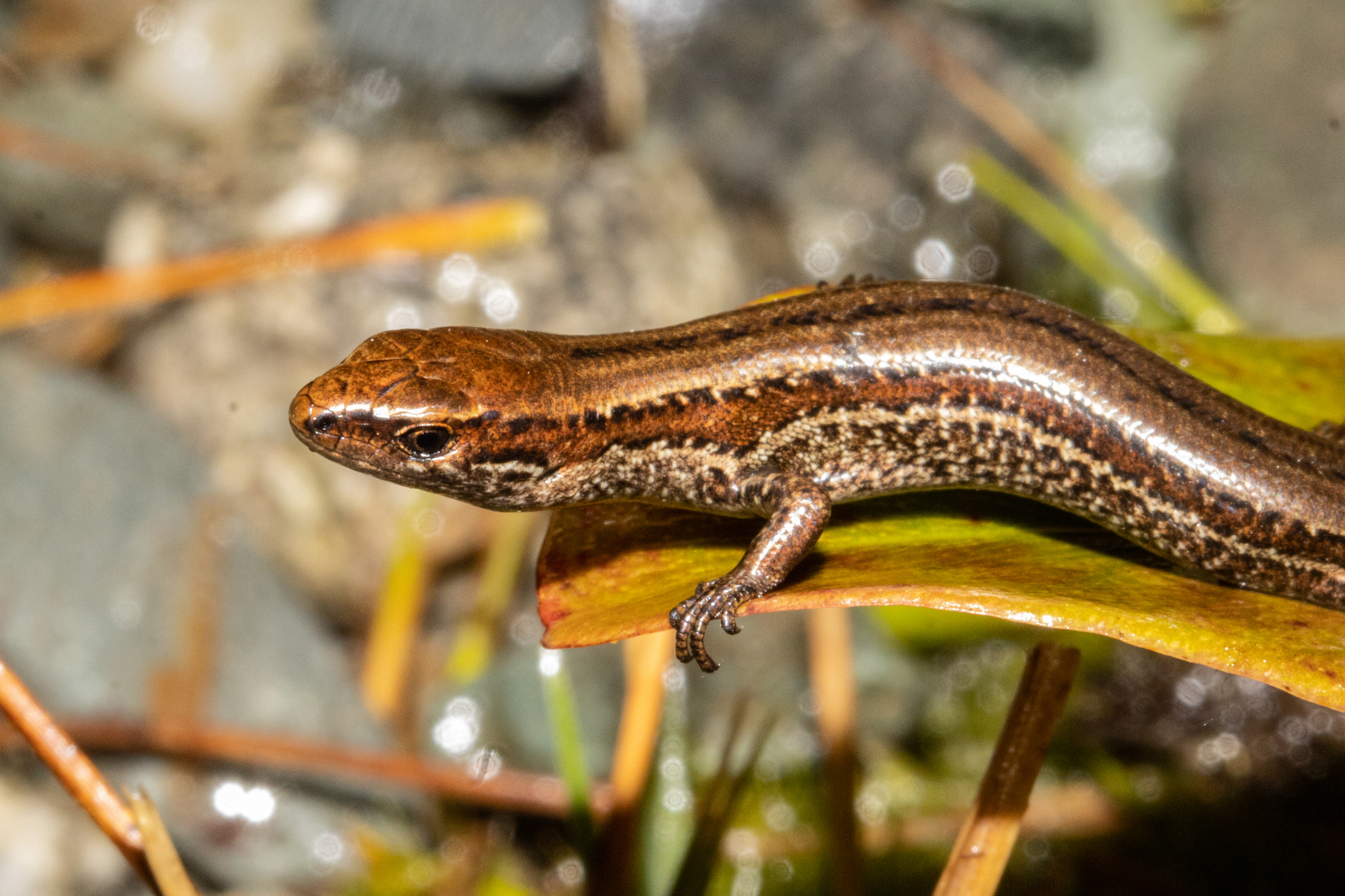
Alinea lanceolata is a critically endangered skink species endemic to a highly restricted range in the Pacific region. This small, elongated lizard displays the characteristic smooth, overlapping scales typical of the Scincidae family, with a slender body adapted for navigating through leaf litter and rocky crevices. The species exhibits a distinctive lanceolate or spear-shaped head pattern that gives it its scientific name, with subtle bronze and brown coloration that provides excellent camouflage against forest substrates.
Alinea lanceolata inhabits tropical dry forests and scrubland environments, where it maintains a secretive, ground-dwelling lifestyle. The species demonstrates typical skink behavior, being most active during dawn and dusk hours when it forages for small invertebrates including ants, termites, and beetle larvae. Like many island endemic reptiles, this species likely has a slow reproductive rate with small clutch sizes, making population recovery challenging.
The International Union for Conservation of Nature classifies Alinea lanceolata as Critically Endangered, reflecting the severe threat of extinction this species faces. The extremely limited geographic range makes the entire population vulnerable to single catastrophic events. However, recent conservation efforts have included habitat protection measures within the species' core range, and local environmental groups have begun monitoring programs to better understand population dynamics and ecological requirements, providing hope for targeted conservation interventions.
Alinea lanceolata faces severe pressure from habitat destruction as coastal development and agricultural expansion fragment its already limited forest habitat. Invasive plant species alter the ground-layer ecosystem structure essential for this ground-dwelling skink's foraging and shelter requirements. The species' extremely restricted range means that even small-scale disturbances can impact the entire global population, while introduced predators such as cats and rats pose additional predation pressure on this small reptile.
Habitat
This species inhabits tropical dry forests and adjacent scrubland areas, preferring areas with dense leaf litter and rocky outcrops that provide shelter and foraging opportunities. The skink shows a strong association with native vegetation communities and requires intact ground-layer habitat structure for successful reproduction and survival.
Conservation measures underway
Other threatened species in SCINCIDAE

Threatened in Barbados

Frequently asked questions
Why is Barbados Skink classified as Critically Endangered?
Where does Barbados Skink live?
What are the main threats to Barbados Skink?
Get weekly conservation intelligence
One short digest a week of the most striking species and country data we ship, plus breaking conservation news paired with our database where it matters.
Free, no spam. One-click unsubscribe in every email.