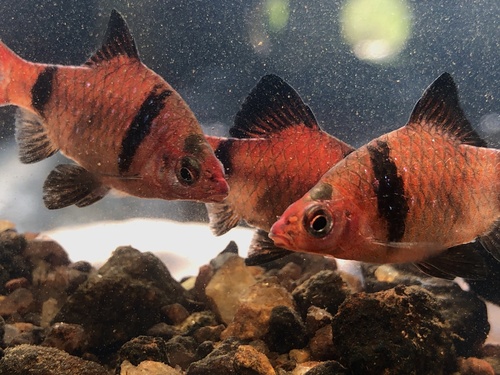
Bandula Barb
Pethia bandula
Photo: Photo: (c) Kaushalya Suwandahennadi, some rights reserved (CC BY-NC), uploaded by Kaushalya Suwandahennadi
Overview
Pethia bandula is a small freshwater cyprinid fish endemic to Sri Lanka, representing one of the island nation's most critically endangered aquatic species. This diminutive barb, typically measuring 3-4 centimeters in length, displays a silvery body with distinctive dark vertical bands that give the species its characteristic appearance. The fish exhibits a compressed, laterally flattened body typical of the Pethia genus, with relatively large eyes and a small, subterminal mouth adapted for feeding on small invertebrates and organic detritus.
Pethia bandula inhabits shallow, slow-moving streams and tributaries within Sri Lanka's wet zone, particularly in areas with sandy or muddy substrates and moderate vegetation cover. The species demonstrates schooling behavior, often forming small groups in areas with gentle currents and adequate dissolved oxygen levels. As a Critically Endangered species according to the IUCN Red List, Pethia bandula faces severe population declines across its extremely limited range.
The species' distribution appears restricted to specific watershed systems in southwestern Sri Lanka, making it particularly vulnerable to localized environmental changes. Current population estimates suggest fewer than 500 mature individuals remain in the wild, with continuing decline observed across all known localities. Despite its precarious status, recent conservation efforts have included habitat monitoring programs and community-based stream protection initiatives that offer hope for the species' recovery.
Local conservation groups have begun working with fishing communities to establish voluntary no-take zones in critical breeding areas, demonstrating growing awareness of the species' conservation needs.
Pethia bandula faces severe threats from agricultural runoff and pesticide contamination in its native Sri Lankan watersheds, which directly impacts water quality and reduces available prey species. Sand mining operations in stream beds destroy critical spawning habitat and alter natural flow patterns essential for the species' reproductive success. Urban development and deforestation in surrounding catchment areas increase sedimentation rates, degrading the clear, well-oxygenated waters this species requires for survival.
Habitat
Pethia bandula inhabits shallow, slow-flowing streams and small tributaries in Sri Lanka's wet zone, preferring areas with sandy or muddy substrates and moderate aquatic vegetation. The species requires well-oxygenated waters with stable flow regimes and minimal sedimentation for optimal survival and reproduction.
Conservation measures underway
Other threatened species in CYPRINIDAE
Threatened in Sri Lanka

Frequently asked questions
Why is Bandula Barb classified as Critically Endangered?
Where does Bandula Barb live?
What are the main threats to Bandula Barb?
Get weekly conservation intelligence
One short digest a week of the most striking species and country data we ship, plus breaking conservation news paired with our database where it matters.
Free, no spam. One-click unsubscribe in every email.