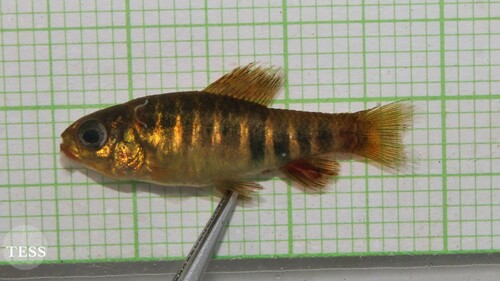
Neolebias lozii
Photo: (c) Russell Tate, all rights reserved, uploaded by Russell Tate
Overview
Neolebias lozii is a small freshwater fish species endemic to West Africa, specifically found in coastal river systems of Guinea and Sierra Leone. This diminutive cyprinid belongs to a genus of African barbs characterized by their small size and specialized habitat requirements. The species inhabits shallow, slow-moving waters with soft substrates and dense aquatic vegetation, typically in forest streams and their associated wetlands.
Neolebias lozii faces severe threats from habitat destruction and degradation throughout its limited range. Deforestation, agricultural expansion, and urban development have significantly impacted the pristine forest watersheds essential for the species' survival. Mining activities, particularly for minerals and metals, have altered water chemistry and sedimentation patterns in many river systems within its range.
Water pollution from agricultural runoff and domestic waste further compromises water quality in remaining habitats. The species' restricted distribution makes it particularly vulnerable to localized threats, as entire populations can be eliminated by single disturbance events. Climate change may exacerbate existing pressures by altering precipitation patterns and water availability in the region.
Limited scientific knowledge about the species' ecology, population size, and specific habitat requirements hampers targeted conservation efforts. Current conservation initiatives focus primarily on broader ecosystem protection rather than species-specific measures. Establishing protected areas within the species' range and implementing sustainable land-use practices in surrounding watersheds represent critical steps for preventing extinction.
Enhanced research efforts are needed to better understand population dynamics and develop effective conservation strategies.
Neolebias lozii faces severe habitat loss from deforestation, agricultural expansion, and mining activities throughout its limited West African range. Water pollution from agricultural runoff and domestic waste degrades remaining aquatic habitats. The species' restricted distribution makes it extremely vulnerable to localized disturbances that could eliminate entire populations.
Habitat
Neolebias lozii inhabits shallow, slow-moving freshwater streams and associated wetlands in forested areas of Guinea and Sierra Leone. The species prefers waters with soft substrates and dense aquatic vegetation in pristine forest watersheds.
Other threatened species in DISTICHODONTIDAE
Threatened in Zambia


Frequently asked questions
Why is Neolebias lozii classified as Critically Endangered?
Where does Neolebias lozii live?
What are the main threats to Neolebias lozii?
Get weekly conservation intelligence
One short digest a week of the most striking species and country data we ship, plus breaking conservation news paired with our database where it matters.
Free, no spam. One-click unsubscribe in every email.