
Awakopaka Skink
Oligosoma awakopaka
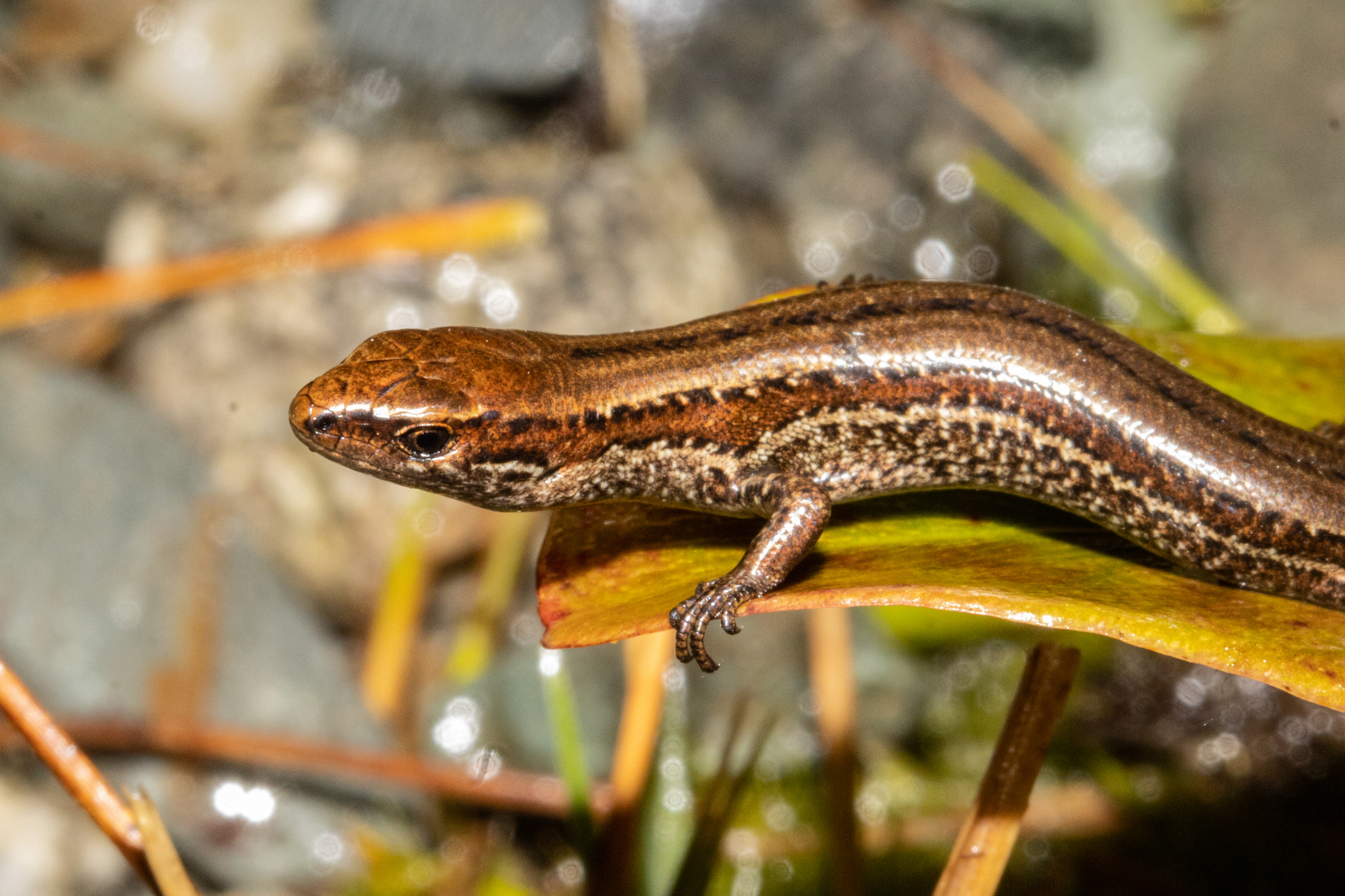
Photo: Wikimedia Commons (CC) via https://en.wikipedia.org/wiki/Oligosoma_awakopaka
Overview
Oligosoma awakopaka is a critically endangered skink endemic to New Zealand's South Island, representing one of the country's rarest reptile species. This medium-sized lizard displays the characteristic elongated body and smooth scales typical of New Zealand skinks, with a distinctive bronze-brown coloration marked by darker longitudinal stripes along its dorsal surface. The species exhibits cryptic behavior, remaining well-camouflaged among rocky crevices and tussock grasslands of its alpine habitat.
Originally known from the Awakino River area in Canterbury, this skink occupies a severely restricted range in high-altitude environments between 800-1200 meters elevation. The species demonstrates typical skink behavior, being primarily diurnal and feeding on small invertebrates, particularly insects and spiders found within its rocky microhabitat. Like other New Zealand skinks, Oligosoma awakopaka is viviparous, giving birth to live young rather than laying eggs, an adaptation that provides advantages in the cool alpine climate.
The International Union for Conservation of Nature classifies this species as Critically Endangered due to its extremely limited distribution and ongoing population decline. Current population estimates suggest fewer than 250 mature individuals remain in the wild, making it one of New Zealand's most imperiled reptiles. However, recent conservation efforts have shown promise, with habitat protection measures implemented in key areas and successful captive breeding programs established at specialized reptile facilities, offering hope for the species' long-term survival.
The primary threat to Oligosoma awakopaka stems from habitat degradation caused by invasive mammalian predators, particularly stoats, rats, and feral cats that prey directly on adults and juveniles. Agricultural intensification and livestock grazing in surrounding lowland areas have fragmented the species' already limited alpine habitat, reducing connectivity between subpopulations. Climate change poses an additional threat as warming temperatures alter the specialized alpine ecosystem conditions this cold-adapted skink requires for survival.
Habitat
Oligosoma awakopaka inhabits alpine and subalpine rocky outcrops, scree slopes, and tussock grasslands in New Zealand's South Island high country. The species shows strong preference for areas with abundant rock crevices and sparse vegetation cover, typically occurring at elevations between 800-1200 meters where temperatures remain cool year-round.
Conservation measures underway
Other threatened species in SCINCIDAE

Frequently asked questions
Why is Awakopaka Skink classified as Critically Endangered?
Where does Awakopaka Skink live?
What are the main threats to Awakopaka Skink?
Get weekly conservation intelligence
One short digest a week of the most striking species and country data we ship, plus breaking conservation news paired with our database where it matters.
Free, no spam. One-click unsubscribe in every email.