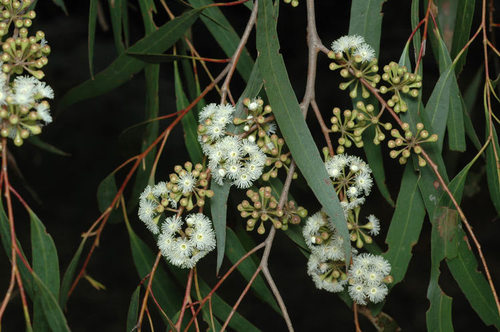
Avon Peppermint
Eucalyptus ornans
Photo: Photo: (c) Murray Fagg, some rights reserved (CC BY)
Overview
Eucalyptus ornans stands as one of Australia's most critically endangered eucalyptus species, classified as Critically Endangered by the IUCN due to its extremely restricted distribution and ongoing population decline. This distinctive mallee eucalyptus typically grows as a multi-stemmed shrub reaching 3-5 meters in height, characterized by its smooth, mottled bark that sheds in irregular patches to reveal cream and grey undertones. The species produces clusters of white to cream flowers during autumn months, followed by small, urn-shaped seed capsules that are notably smaller than those of related species.
Endemic to a tiny area of southwestern Western Australia, E. ornans is confined to lateritic soils on low ridges and gentle slopes within the wheatbelt region, where it grows alongside other threatened flora in remnant woodland fragments. The species demonstrates remarkable drought tolerance, having evolved specialized root systems that can access deep groundwater reserves during extended dry periods.
Historical records suggest the species once occupied a broader range across similar soil types, but agricultural clearing has reduced its habitat to fewer than ten known populations scattered across an area of less than 100 square kilometers. Each remaining population typically contains fewer than 50 mature individuals, making the species extremely vulnerable to local extinctions from fire, disease, or other disturbances. Encouragingly, recent conservation efforts have included seed banking programs and the establishment of several ex-situ populations in botanical gardens, while land management agreements with private landowners have helped protect some of the most viable remaining stands from further agricultural encroachment.
The primary threat to Eucalyptus ornans stems from historical and ongoing agricultural clearing within Western Australia's wheatbelt, which has eliminated an estimated 95% of the species' original habitat. The remaining fragmented populations face increased vulnerability to Phytophthora dieback disease, which spreads rapidly through the lateritic soils where the species grows. Climate change poses an additional threat through altered rainfall patterns and increased fire frequency, while the species' extremely small population sizes make it susceptible to genetic bottlenecks and random extinction events.
Habitat
Eucalyptus ornans inhabits lateritic breakaways and low ridges in the semi-arid wheatbelt region of southwestern Western Australia, typically growing in shallow, well-drained soils over laterite or granite substrates. The species occurs in open woodland communities dominated by mallee eucalypts and associated shrubland, where annual rainfall ranges from 300-450mm and falls predominantly during winter months.
Conservation measures underway
Other threatened species in MYRTACEAE
Frequently asked questions
Why is Avon Peppermint classified as Critically Endangered?
Where does Avon Peppermint live?
What are the main threats to Avon Peppermint?
Get weekly conservation intelligence
One short digest a week of the most striking species and country data we ship, plus breaking conservation news paired with our database where it matters.
Free, no spam. One-click unsubscribe in every email.