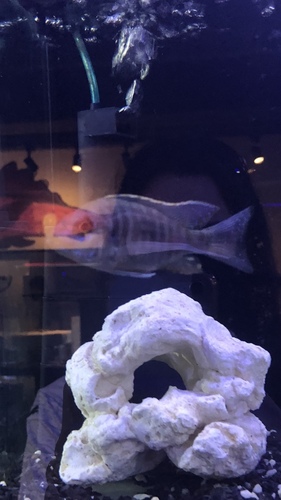
Blue Orchid Aulonocara
Aulonocara kandeense
Photo: Photo: (c) Mariana Gouveia, some rights reserved (CC BY-NC), uploaded by Mariana Gouveia
Overview
Aulonocara kandeense, the blue orchid aulonacara, is a species of haplochromine cichlid which is endemic to Lake Malawi where it occurs only around Kande Island, in Malawian waters. It is found in a mixed habitat where rocky areas meet softer substrates. The breeding males are found at a mean depth of 8 metres (26 ft) They sift their food from the sand and this is made up of small invertebrates.
It detects the movements of tiny prey under the surface of the sand. The males are territorial and they defend their territories where the sand meets rockier areas. The females gather in large schools to forage, and these can count over 100 fishes, over the open sand a few metres away from any rocks.
spawning occurs within a cave or cavity within the male's cave, which usually near the lake bed. There can be over 100 fry in a brood.
Aulonocara kandeense faces severe threats from overfishing and habitat degradation in Lake Malawi. The species' restricted range around Kande Island makes it particularly vulnerable to localized fishing pressure and environmental changes. Sedimentation from agricultural runoff and deforestation in the catchment area has degraded critical rocky reef habitats where this cichlid feeds and breeds.
Habitat
This endemic cichlid inhabits the rocky shores and intermediate depths around Kande Island in Lake Malawi, typically found at depths of 10-40 meters. It prefers areas with sandy substrates interspersed with rocky outcrops where it can forage for invertebrates and establish territories.
Conservation measures underway
Other threatened species in CICHLIDAE

Threatened in Malawi


Frequently asked questions
Why is Blue Orchid Aulonocara classified as Critically Endangered?
Where does Blue Orchid Aulonocara live?
What are the main threats to Blue Orchid Aulonocara?
Get weekly conservation intelligence
One short digest a week of the most striking species and country data we ship, plus breaking conservation news paired with our database where it matters.
Free, no spam. One-click unsubscribe in every email.