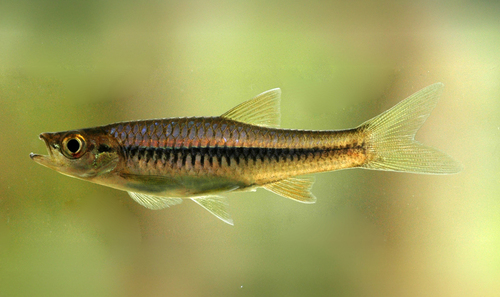
Armitagei's Rasbora
Rasbora armitagei
Photo: (c) rohanpethiyagoda, some rights reserved (CC BY-ND)
Overview
Rasbora armitagei is a small freshwater fish species endemic to Southeast Asia, specifically found in river systems within a limited geographic range. This cyprinid fish inhabits clear, flowing waters with specific water chemistry requirements and is typically associated with well-oxygenated streams and tributaries. The species has experienced severe population declines that have led to its classification as Critically Endangered by the IUCN, indicating an extremely high risk of extinction in the wild.
Primary threats to R. armitagei include habitat degradation and loss due to deforestation, agricultural expansion, and urban development within its watershed. Water pollution from agricultural runoff, industrial discharge, and domestic waste has significantly impacted water quality in its native range.
Additionally, alterations to natural water flow patterns through dam construction and water extraction have disrupted the species' breeding and feeding habitats. The aquarium trade may also pose pressure on wild populations, though the extent of collection impact varies by location. Conservation efforts for this species remain limited, with habitat protection being the most critical need.
Establishing protected areas within its range and implementing watershed management practices could help preserve remaining populations. Research into the species' specific ecological requirements and population status is essential for developing targeted conservation strategies. Without immediate conservation intervention, R.
armitagei faces a high probability of extinction, making it a priority species for freshwater biodiversity conservation efforts in Southeast Asia.
Rasbora armitagei faces severe threats from habitat destruction caused by deforestation, agricultural expansion, and urban development within its watershed. Water pollution from agricultural runoff and industrial discharge has degraded water quality in its native streams. Dam construction and water extraction have further disrupted the natural flow patterns essential for the species' survival.
Habitat
Rasbora armitagei inhabits clear, flowing freshwater streams and tributaries in Southeast Asian river systems. The species requires well-oxygenated waters with specific water chemistry conditions typical of undisturbed tropical watersheds.
Other threatened species in DANIONIDAE
Threatened in Sri Lanka

Frequently asked questions
Why is Armitagei's Rasbora classified as Critically Endangered?
Where does Armitagei's Rasbora live?
What are the main threats to Armitagei's Rasbora?
Get weekly conservation intelligence
One short digest a week of the most striking species and country data we ship, plus breaking conservation news paired with our database where it matters.
Free, no spam. One-click unsubscribe in every email.