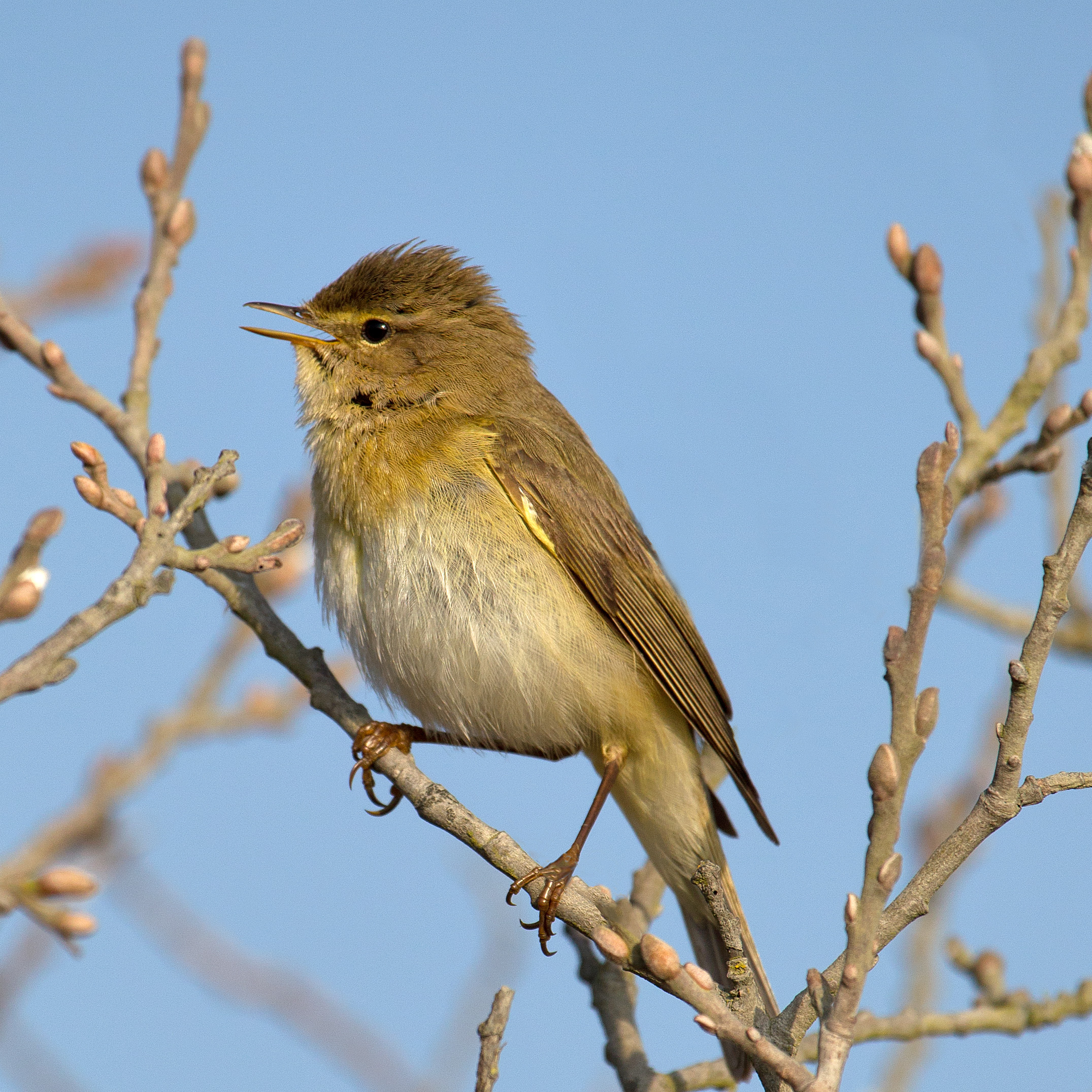
Arctic Warbler
ENEndangered

Arctic Warbler

Phylloscopus borealis

The Arctic warbler is a widespread leaf warbler in birch or mixed birch forest near water throughout its breeding range in Fennoscandia and the northern Palearctic. It has established a foothold in North America, breeding in Alaska.

Photo: Wikimedia Commons (CC) via https://en.wikipedia.org/wiki/Arctic_warbler

01Classification

Taxonomy & Classification

Kingdom

Animalia

Phylum

Chordata

Class

Aves

Order

Passeriformes

Family

Phylloscopidae

Genus

Phylloscopus

Arctic Warbler belongs to the family Phylloscopidae, order Passeriformes, within the Aves class.

02Description

Species Profile

The Arctic warbler is a widespread leaf warbler in birch or mixed birch forest near water throughout its breeding range in Fennoscandia and the northern Palearctic. It has established a foothold in North America, breeding in Alaska. This warbler is strongly migratory; the entire population winters in southeast Asia. It therefore has one of the longest migrations of any Old World insectivorous bird.

The Arctic Warbler faces significant population declines primarily due to habitat loss from deforestation and agricultural conversion in both breeding and wintering grounds. Climate change is altering the timing of insect emergence, disrupting the species' breeding cycle and food availability during critical periods.

Key Facts

IUCN StatusEndangered (EN)
GroupBirds
03Habitat

Habitat & Distribution

TERRESTRIALMajor
04Threats

Threats

!

IUCN Red List: Endangered

The Arctic Warbler faces significant population declines primarily due to habitat loss from deforestation and agricultural conversion in both breeding and wintering grounds. Climate change is altering the timing of insect emergence, disrupting the species' breeding cycle and food availability during critical periods.

Agricultural conversion of habitat

HighOngoing

Climate change disrupting insect prey cycles

HighOngoing

Deforestation in breeding grounds

HighOngoing

Changes in forest structure from logging

MediumOngoing

Habitat degradation in wintering areas

MediumOngoing
07National Status

National vs Global Threat Status

How this species is assessed at the national level compared to its IUCN global status (EN).

CountryNational StatusGlobal StatusComparison
EULCLeast ConcernENEndangeredLower local risk

National Red List data sourced from the National Red List Project (nationalredlist.org, ZSL) and country-specific Red List authorities.

Community

Community Sightings

Report a sighting

No community sightings yet. Be the first to report!

07Sources

Sources & Attribution

How to Cite

IUCN: IUCN (2025). The IUCN Red List of Threatened Species. Version 2025-1. Available at: https://www.iucnredlist.org. doi:10.2305/IUCN.UK.2025-1.RLTS

GBIF: GBIF.org (2025). GBIF Home Page. Available at: https://www.gbif.org

National Red Lists: ZSL (2025). National Red List. Zoological Society of London. Available at: https://www.nationalredlist.org

This page: SpeciesRadar (2025). Arctic Warbler (Phylloscopus borealis). SpeciesRadar: Intelligence for Earth's Biodiversity. Available at: https://speciesradar.org/species/arctic-warbler

Full citation guide & data usage terms