
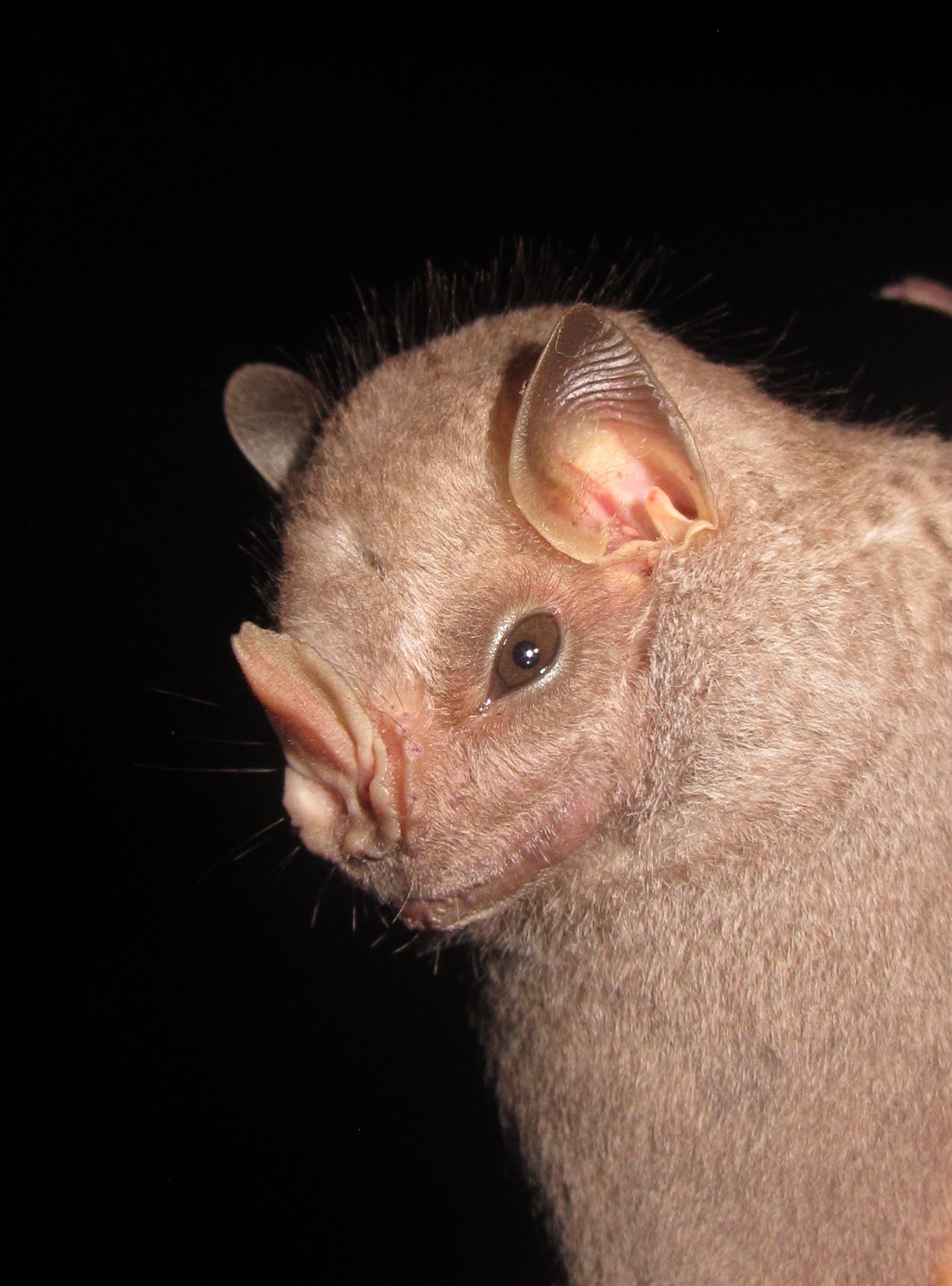
Aratathomas's Yellow-shouldered Bat
Sturnira aratathomasi
Photo: Wikimedia Commons (CC) via https://en.wikipedia.org/wiki/Aratathomas's_yellow-shouldered_bat
Overview
Aratathomas's yellow-shouldered bat is a species of bat in the family Phyllostomidae native to South America.
Aratathomas's Yellow-shouldered Bat faces significant threats from habitat loss due to deforestation and agricultural expansion across its limited range in South America. The species' restricted distribution makes it particularly vulnerable to environmental changes and human encroachment into its forest habitats.
Habitat
This species inhabits tropical moist forests and forest edges in the Andean foothills and adjacent lowlands of South America. It typically occurs in primary and secondary forests at elevations ranging from lowland areas up to montane zones.
Other threatened species in Phyllostomidae
Frequently asked questions
Why is Aratathomas's Yellow-shouldered Bat classified as Vulnerable?
Where does Aratathomas's Yellow-shouldered Bat live?
What are the main threats to Aratathomas's Yellow-shouldered Bat?
Get weekly conservation intelligence
One short digest a week of the most striking species and country data we ship, plus breaking conservation news paired with our database where it matters.
Free, no spam. One-click unsubscribe in every email.