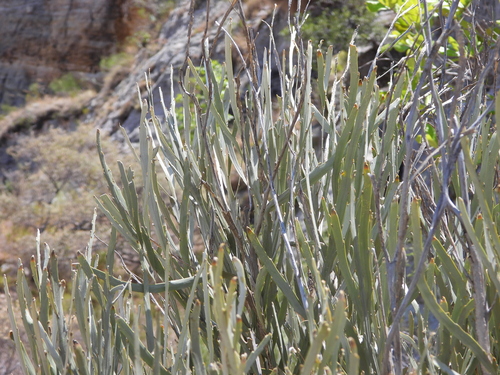
Phylloxylon xiphocladum
Photo: iNaturalist: (c) amantedarmanin, some rights reserved (CC BY)
Overview
Arahara (Phylloxylon xiphocladum) is a distinctive woody shrub or small tree characterized by its sword-like, flattened branch segments that function as photosynthetic organs in place of traditional leaves. This unique morphological adaptation allows it to thrive in arid environments while serving as an important structural component in its native ecosystem, providing shelter and nesting sites for various small vertebrates and invertebrates.
Arahara (Phylloxylon xiphocladum) is primarily threatened by habitat loss and degradation due to agricultural expansion, urban development, and invasive plant species in its native Mascarene Islands range. The species' extremely limited distribution and small population size make it particularly vulnerable to environmental changes and human activities.
Habitat
Arahara inhabits rocky outcrops and well-drained slopes in semi-arid scrublands, typically growing on shallow, mineral-rich soils between 300-800 meters elevation. It is commonly found in association with other drought-adapted vegetation along ridgelines and exposed hillsides where water drainage is rapid.
Other threatened species in Fabaceae

Frequently asked questions
Why is Phylloxylon xiphocladum classified as Endangered?
Where does Phylloxylon xiphocladum live?
What are the main threats to Phylloxylon xiphocladum?
Get weekly conservation intelligence
One short digest a week of the most striking species and country data we ship, plus breaking conservation news paired with our database where it matters.
Free, no spam. One-click unsubscribe in every email.