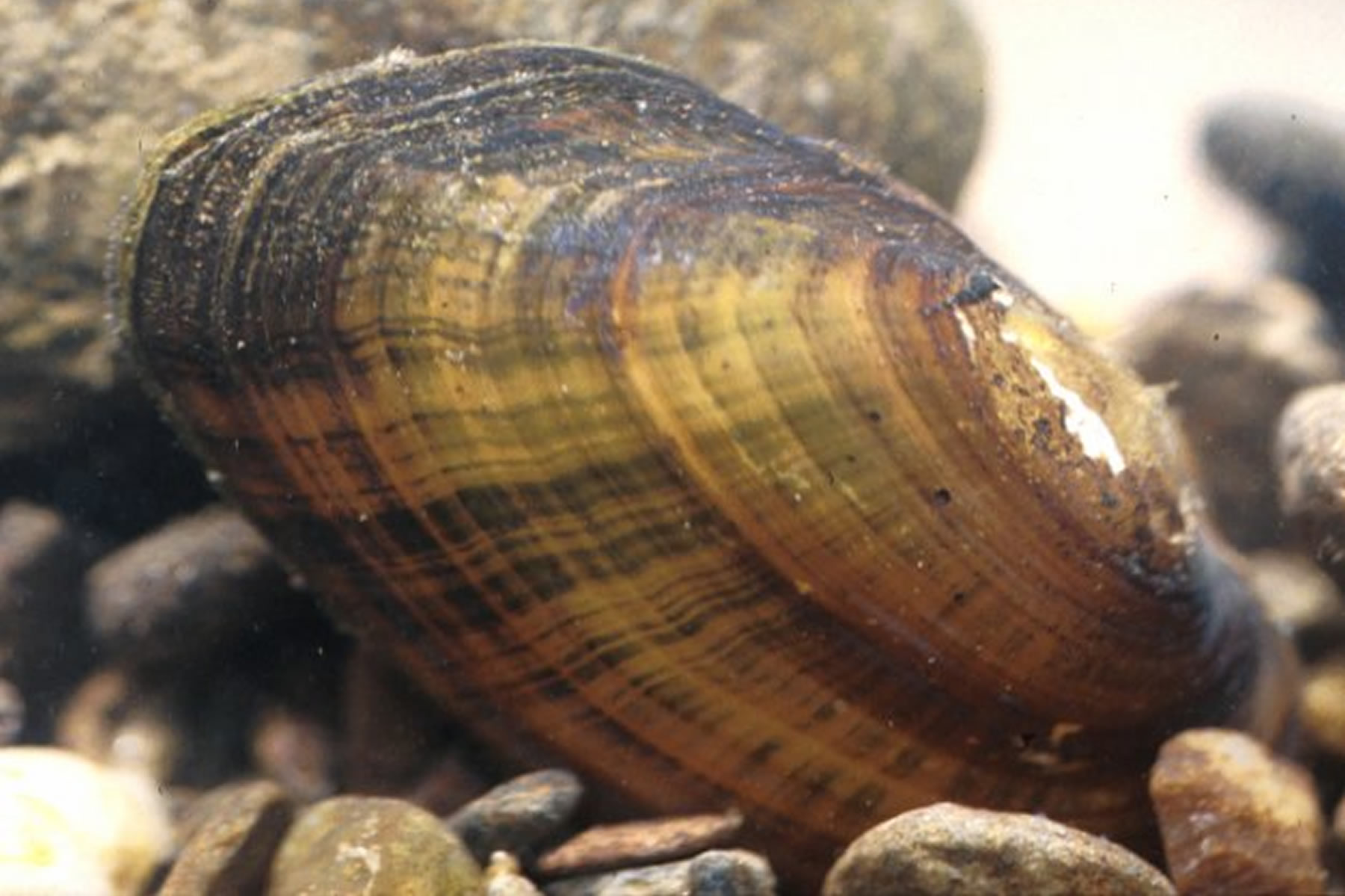
Appalachian Elktoe
Alasmidonta raveneliana
Photo: Photo: Wikimedia Commons, CC BY-SA
Overview
Alasmidonta raveneliana, commonly known as the Appalachian elktoe, is a critically endangered freshwater mussel endemic to the southeastern United States. This medium-sized bivalve reaches approximately 8-10 centimeters in length, displaying a distinctive elongated, kidney-shaped shell with prominent growth rings and a yellowish-brown to dark brown periostracum. The species exhibits the characteristic compressed profile typical of its genus, with a slightly curved ventral margin and moderately inflated umbones.
Historically distributed across river systems in North Carolina, South Carolina, and Georgia, the Appalachian elktoe now persists in only a handful of locations within the upper Catawba River drainage and select tributaries of the Savannah River basin. Like all freshwater mussels, this species requires specific fish hosts to complete its complex reproductive cycle, with larval glochidia attaching to the gills or fins of compatible fish species during their parasitic stage. The Appalachian elktoe inhabits clean, well-oxygenated streams with stable gravel and sand substrates, typically in areas with moderate to swift current flow.
Classified as Critically Endangered by the IUCN, the species faces an extremely high risk of extinction in the wild due to severe population declines and habitat degradation. Recent conservation efforts have shown promise, including habitat restoration projects and captive breeding programs that have successfully produced juvenile mussels for potential reintroduction, offering hope for the species' long-term survival.
The Appalachian elktoe faces severe threats from dam construction and water diversions that have fragmented its riverine habitat and altered natural flow regimes essential for reproduction and feeding. Agricultural runoff and urban development have degraded water quality through sedimentation and nutrient pollution, while invasive species competition and the decline of native fish host populations have further compromised the mussel's complex life cycle. Climate change-induced alterations to precipitation patterns and stream temperatures pose additional stress to remaining populations in their already restricted range.
Habitat
The Appalachian elktoe inhabits clean, fast-flowing streams and small rivers with stable substrates of mixed gravel, sand, and cobble. This species requires well-oxygenated waters with minimal siltation and depends on the presence of suitable native fish hosts for successful reproduction.
Conservation measures underway
Other threatened species in UNIONIDAE

Threatened in United States
Frequently asked questions
Why is Appalachian Elktoe classified as Critically Endangered?
Where does Appalachian Elktoe live?
What are the main threats to Appalachian Elktoe?
Get weekly conservation intelligence
One short digest a week of the most striking species and country data we ship, plus breaking conservation news paired with our database where it matters.
Free, no spam. One-click unsubscribe in every email.