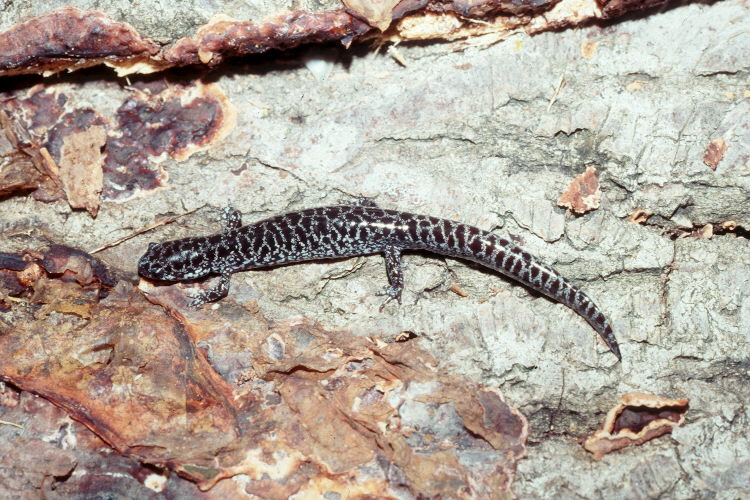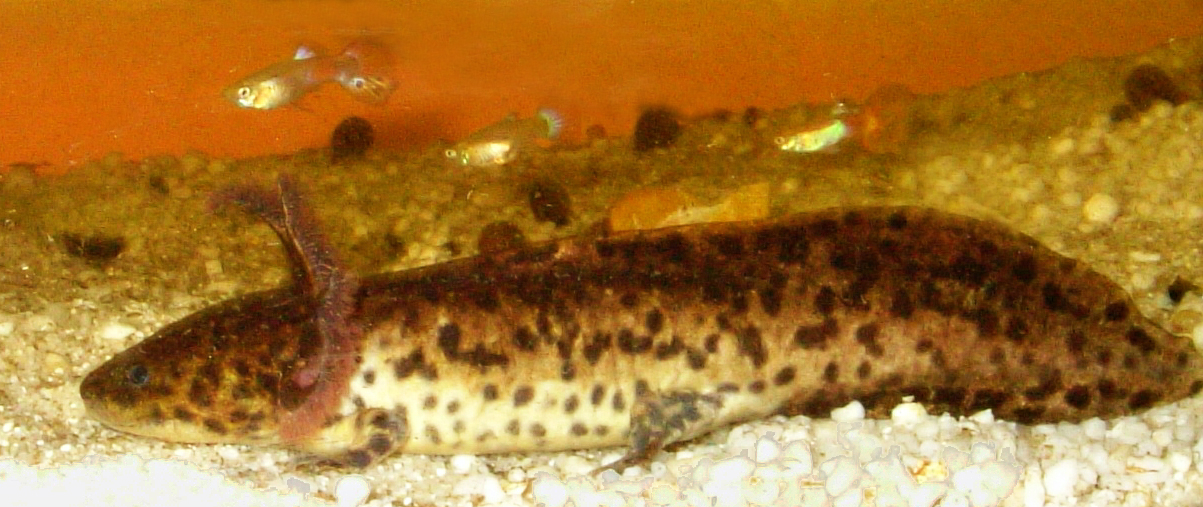
Ambystoma andersoni
CRCritically Endangered

Ambystoma andersoni

# Anderson's Salamander (Ambystoma andersoni) Anderson's Salamander is a critically endangered amphibian endemic to the high-altitude lakes of central Mexico. This medium-sized salamander exhibits neoteny, retaining its aquatic larval characteristics throughout its adult life, including external gills and a laterally compressed tail for swimming.

Decreasing

Population trend

1

Countries

Photo: Wikimedia Commons (CC) via https://en.wikipedia.org/wiki/Anderson's_salamander

01Classification

Taxonomy & Classification

Kingdom

ANIMALIA

Phylum

CHORDATA

Class

AMPHIBIA

Order

CAUDATA

Family

AMBYSTOMATIDAE

Genus

Ambystoma

Ambystoma andersoni belongs to the family AMBYSTOMATIDAE, order CAUDATA, within the AMPHIBIA class.

02Description

Species Profile

# Anderson's Salamander (Ambystoma andersoni) Anderson's Salamander is a critically endangered amphibian endemic to the high-altitude lakes of central Mexico. This medium-sized salamander exhibits neoteny, retaining its aquatic larval characteristics throughout its adult life, including external gills and a laterally compressed tail for swimming. The species displays a dark brown to black coloration with lighter spotting patterns that vary among individuals. As an obligate aquatic species, Anderson's Salamander inhabits the cool, oxygen-rich waters of volcanic crater lakes and associated wetlands in the Trans-Mexican Volcanic Belt, primarily within Mexico's central highlands. These salamanders occupy a crucial ecological niche as both predator and prey, feeding on aquatic invertebrates, small fish, and amphibian larvae while serving as food for birds, fish, and other aquatic predators. The species faces severe threats from habitat degradation and water extraction for agricultural and urban use. Lake pollution from agricultural runoff and urban development has compromised water quality in many of its native habitats. Additionally, the introduction of non-native fish species has created competition for resources and increased predation pressure on both juvenile and adult salamanders. Conservation efforts remain limited, though some populations occur within protected areas. Research initiatives focus on population monitoring and habitat assessment, while ex-situ breeding programs are being considered to maintain genetic diversity. The current outlook for Anderson's Salamander remains precarious. With an unknown population trend and continuing habitat pressures, the species requires immediate comprehensive conservation action to prevent further decline and potential extinction.

The primary threats to Anderson's Salamander have not been formally assessed or documented by conservation scientists. Without this threat assessment data, it's not possible to identify the specific dangers this species faces or understand what might be causing population changes. The status of threats to this salamander - whether they are getting worse, staying the same, or improving - cannot be determined without proper scientific evaluation.

Key Facts

IUCN StatusCritically Endangered (CR)
TrendDecreasing
GroupAmphibians
03Habitat

Habitat & Distribution

Wetlands (inland) - Permanent freshwater lakesMajor
04Threats

Threats

!

IUCN Red List: Critically Endangered

The primary threats to Anderson's Salamander have not been formally assessed or documented by conservation scientists. Without this threat assessment data, it's not possible to identify the specific dangers this species faces or understand what might be causing population changes. The status of threats to this salamander - whether they are getting worse, staying the same, or improving - cannot be determined without proper scientific evaluation.

Annual & perennial non-timber crops

Ongoing

Invasive non-native/alien species/diseases

Ongoing

Type Unknown/Unrecorded (pollution)

Ongoing
05Conservation

Conservation Actions

Site/area protection
Habitat & natural process restoration
Species management
Species recovery
06Range

Found in 1 Country

Community

Community Sightings

Report a sighting

No community sightings yet. Be the first to report!

07Sources

Sources & Attribution

How to Cite

IUCN: IUCN (2025). The IUCN Red List of Threatened Species. Version 2025-1. Available at: https://www.iucnredlist.org. doi:10.2305/IUCN.UK.2025-1.RLTS

GBIF: GBIF.org (2025). GBIF Home Page. Available at: https://www.gbif.org

This page: SpeciesRadar (2026). Ambystoma andersoni (Ambystoma andersoni). SpeciesRadar: Intelligence for Earth's Biodiversity. Available at: https://speciesradar.org/species/andersons-salamander

Full citation guide & data usage terms