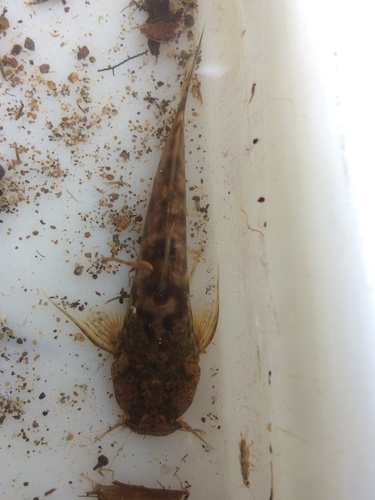
Astroblepus ubidiai
Photo: Photo: (c) verocrespoperez, some rights reserved (CC BY-NC)
Overview
Astroblepus ubidiai is a critically endangered freshwater catfish endemic to the high-altitude streams of Ecuador's Andean region. This small, elongated fish belongs to the Astroblepidae family, commonly known as climbing catfish, characterized by their ability to navigate steep rocky surfaces using modified pelvic fins that function as suction cups. The species displays the typical astroblepid body plan with a flattened ventral surface, reduced swim bladder, and robust pectoral fins adapted for life in fast-flowing mountain waters.
Its mottled brown and gray coloration provides excellent camouflage against the rocky substrate of its native streams. The species inhabits cold, oxygen-rich waters at elevations typically exceeding 2,500 meters, where it feeds on aquatic invertebrates and organic detritus. Astroblepus ubidiai is classified as Critically Endangered by the IUCN, reflecting its extremely restricted range and the severe threats facing its aquatic habitat.
The species appears to be endemic to a very limited geographic area within Ecuador's mountainous regions, making it particularly vulnerable to environmental changes. Like other high-altitude Andean catfish, this species likely plays an important ecological role in nutrient cycling within its stream ecosystem. Recent conservation efforts in Ecuador have focused on protecting high-altitude watersheds, which may benefit this species and other endemic aquatic fauna.
The discovery and scientific description of Astroblepus species continues to reveal the remarkable diversity of South America's mountain stream ecosystems, highlighting the importance of preserving these unique freshwater habitats.
The primary threats to Astroblepus ubidiai stem from its extremely restricted range and the vulnerability of high-altitude Andean stream systems. Mining activities and agricultural expansion in Ecuador's mountain regions pose direct risks through habitat destruction and water contamination. Climate change represents a particularly severe threat, as rising temperatures and altered precipitation patterns can dramatically affect the cold, oxygen-rich stream conditions this species requires for survival.
Habitat
Astroblepus ubidiai inhabits fast-flowing, rocky streams in Ecuador's high Andes, typically at elevations above 2,500 meters. These cold, well-oxygenated mountain waters feature steep gradients and boulder-strewn substrates that provide the specialized habitat conditions required by this climbing catfish species.
Conservation measures underway
Other threatened species in ASTROBLEPIDAE
Threatened in Ecuador

Frequently asked questions
Why is Astroblepus ubidiai classified as Critically Endangered?
Where does Astroblepus ubidiai live?
What are the main threats to Astroblepus ubidiai?
Get weekly conservation intelligence
One short digest a week of the most striking species and country data we ship, plus breaking conservation news paired with our database where it matters.
Free, no spam. One-click unsubscribe in every email.