
Butterfly Splitfin
Ameca splendens
Photo: Photo: Wikimedia Commons, CC BY-SA
Overview
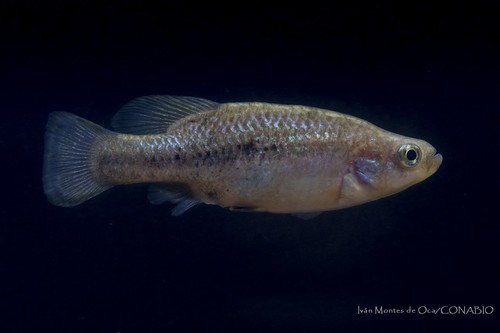
The Butterfly Splitfin (Ameca splendens) is a small, striking freshwater fish endemic to Mexico, named for the male's enlarged, flag-like caudal fin marked with a bold black-and-yellow band that resembles a butterfly wing when displayed. Males also possess a distinctive golden-yellow body sheen during breeding periods, while females are more subdued in coloration and grow slightly larger. As a livebearing member of the Goodeidae family, it gives birth to fully-formed young rather than laying eggs, a reproductive strategy shared by its close relatives in the springs and rivers of the Mexican Plateau.
Historically, the species was restricted to the Rio Ameca basin and associated spring systems in Jalisco, where it inhabited clear, slow-moving waters with dense aquatic vegetation, feeding on algae, small invertebrates, and organic detritus. The species is classified as Critically Endangered (CR) by the IUCN, with wild populations in continuing decline due to severe habitat degradation, water extraction for agriculture, pollution from urban and industrial runoff, and the introduction of non-native fish species that compete with and prey upon it. In several of its native localities, the species is believed to be extirpated entirely, surviving only in isolated remnant habitats.
Despite this bleak trajectory in the wild, the Butterfly Splitfin has become one of the most successful examples of ex-situ conservation among freshwater fishes: it is widely bred in aquariums and public zoos worldwide, maintaining genetically diverse captive populations that serve as a safeguard against complete extinction and offer real potential for future reintroduction efforts. Conservation groups and Mexican researchers continue to monitor remaining wild sites and explore habitat restoration options, while its popularity among aquarists has inadvertently created a robust global backup population — a rare conservation silver lining for a species otherwise pushed to the brink in its natural range.
The Ameca splendens faces extinction primarily due to severe habitat degradation and water extraction in its native Rio Ameca system in Jalisco, Mexico. Introduced exotic fish species, particularly tilapia and other cichlids, have disrupted the ecosystem and compete directly with this endemic goodeid. Urban development and agricultural expansion have further reduced water quality and flow in the already limited spring-fed habitats where this species evolved.
Habitat
This endemic Mexican fish inhabits shallow, spring-fed pools and slow-flowing sections of the Rio Ameca drainage system in Jalisco. The species requires clear, well-oxygenated waters with abundant aquatic vegetation and prefers areas with sandy or rocky substrates near natural springs.
Conservation measures underway
Other threatened species in GOODEIDAE

Frequently asked questions
Why is Butterfly Splitfin classified as Critically Endangered?
Where does Butterfly Splitfin live?
What are the main threats to Butterfly Splitfin?
Get weekly conservation intelligence
One short digest a week of the most striking species and country data we ship, plus breaking conservation news paired with our database where it matters.
Free, no spam. One-click unsubscribe in every email.