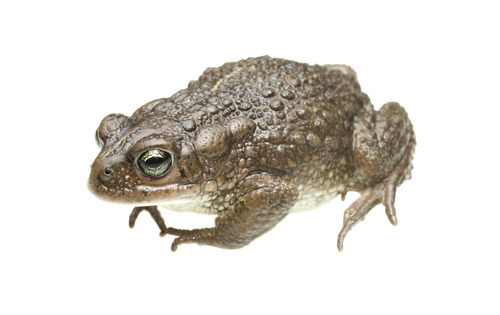
Amathole Toad
Vandijkophrynus amatolicus
Photo: Photo: (c) Oliver Angus, some rights reserved (CC BY-NC), uploaded by Oliver Angus
Overview
Vandijkophrynus amatolicus is a small, robust toad endemic to the high-altitude grasslands of the Amatola Mountains in South Africa's Eastern Cape Province. This critically endangered amphibian displays the characteristic warty skin typical of the Bufonidae family, with a mottled brown and grey coloration that provides excellent camouflage among the rocky outcrops and tussock grasslands of its montane habitat. Adults typically measure 35-45mm in snout-vent length, with females being slightly larger than males.
The species exhibits a distinctive breeding behavior, congregating in shallow, temporary pools formed by seasonal rainfall between October and February. Outside the breeding season, individuals shelter under rocks and in crevices within the grassland matrix. The toad's distribution is extremely restricted, confined to elevations above 1,800 meters in the Amatola range, making it one of South Africa's most geographically limited amphibians.
The species is classified as Critically Endangered by the IUCN due to its tiny range of less than 10 square kilometers and continuing population decline. Recent surveys have documented fewer than 500 breeding adults across all known localities. However, conservation efforts have intensified since 2018, with the Eastern Cape Parks and Tourism Agency implementing habitat protection measures and establishing monitoring protocols.
Local community engagement programs have also raised awareness about this unique endemic species, and captive breeding research is being explored as a potential conservation tool.
The primary threat to Vandijkophrynus amatolicus is habitat degradation from overgrazing by livestock, particularly cattle and goats, which trample breeding pools and alter the grassland structure essential for the species' survival. Invasive plant species, notably black wattle and pine plantations, are encroaching into the toad's high-altitude habitat, reducing available breeding sites and foraging areas. Climate change poses an additional threat through altered precipitation patterns that affect the formation and persistence of the temporary pools crucial for reproduction.
Habitat
This species inhabits high-altitude montane grasslands and rocky outcrops in the Amatola Mountains, occurring exclusively above 1,800 meters elevation. The habitat is characterized by short, tussocky grasses interspersed with exposed rock formations and seasonal seepage areas that form temporary breeding pools during the summer rainfall period.
Conservation measures underway
Other threatened species in BUFONIDAE
Threatened in South Africa


Frequently asked questions
Why is Amathole Toad classified as Endangered?
Where does Amathole Toad live?
What are the main threats to Amathole Toad?
Get weekly conservation intelligence
One short digest a week of the most striking species and country data we ship, plus breaking conservation news paired with our database where it matters.
Free, no spam. One-click unsubscribe in every email.