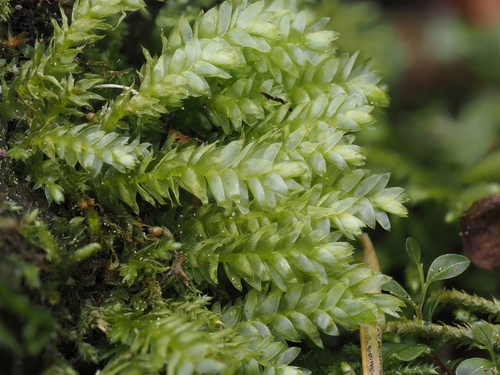
Alpine Silk-moss
Plagiothecium platyphyllum
Photo: iNaturalist: (c) Konrad and Roland Greinwald, some rights reserved (CC BY-NC), uploaded by Konrad and Roland Greinwald
Overview
Alpine Silk-moss is a small bryophyte characterized by its flattened, glossy green shoots and broad, overlapping leaves that create a distinctive silky appearance. The moss forms low, spreading mats typically 2-4 cm in height, with leaves arranged in a flattened pattern that helps distinguish it from related species. As a non-vascular plant, it plays a crucial role in alpine ecosystems by stabilizing soil, retaining moisture, and providing microhabitats for invertebrates and other small organisms.
This species occurs in high-altitude environments across limited mountainous regions, primarily in Europe. It inhabits rocky crevices, cliff faces, and boulder fields in alpine and subalpine zones, typically above 1,500 meters elevation. The moss requires specific microclimatic conditions, including consistent moisture levels and protection from extreme temperature fluctuations.
The species faces significant threats from climate change, as rising temperatures alter the delicate alpine conditions it requires. Habitat fragmentation due to infrastructure development and recreational activities in mountain regions further restricts its already limited range. The moss's slow growth rate and specialized habitat requirements make it particularly vulnerable to environmental changes.
Current conservation efforts are limited, with the species receiving protection primarily through existing alpine reserve systems. Research into its precise distribution and population dynamics remains incomplete, hampering targeted conservation planning.
The outlook for Alpine Silk-moss remains uncertain. Without comprehensive population monitoring and specific conservation interventions addressing climate-related threats, the species' critically endangered status reflects genuine concerns about its long-term survival prospects.
Based on the available information, the specific threats to Alpine Silk-moss have not yet been formally assessed or documented by researchers. Without a proper threat assessment, it's unclear what particular dangers this moss species may be facing in its natural habitat. The status of whether threats are increasing, stable, or decreasing cannot be determined until scientists conduct a thorough evaluation of the risks to this species.
Other threatened species in Plagiotheciaceae
Frequently asked questions
Why is Alpine Silk-moss classified as Critically Endangered?
Where does Alpine Silk-moss live?
What are the main threats to Alpine Silk-moss?
Get weekly conservation intelligence
One short digest a week of the most striking species and country data we ship, plus breaking conservation news paired with our database where it matters.
Free, no spam. One-click unsubscribe in every email.