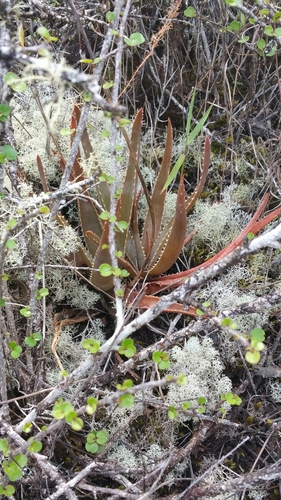
Aloe leandrii
Photo: (c) mamy_andriamahay, some rights reserved (CC BY-NC), uploaded by mamy_andriamahay
Overview
A detailed profile for this species is sourced from the IUCN Red List of Threatened Species as assessments become available.
Aloe leandrii faces severe population decline primarily due to habitat destruction from agricultural expansion and charcoal production in Madagascar's dry forests. The species is further threatened by overcollection for traditional medicine and the horticultural trade, with its striking appearance making it particularly sought after. Climate change exacerbates these pressures by altering precipitation patterns in its already arid habitat, while invasive plant species compete for limited resources in degraded areas.
Habitat
Aloe leandrii is endemic to the dry deciduous forests and spiny thickets of southwestern Madagascar, typically growing on rocky outcrops and limestone substrates. The species thrives in arid conditions with well-drained soils, often found in association with other succulent plants in Madagascar's unique spiny forest ecosystem.
Other threatened species in ASPHODELACEAE
Threatened in Madagascar

Frequently asked questions
Why is Aloe leandrii classified as Critically Endangered?
Where does Aloe leandrii live?
What are the main threats to Aloe leandrii?
Get weekly conservation intelligence
One short digest a week of the most striking species and country data we ship, plus breaking conservation news paired with our database where it matters.
Free, no spam. One-click unsubscribe in every email.