Scytinium fragrans
Overview
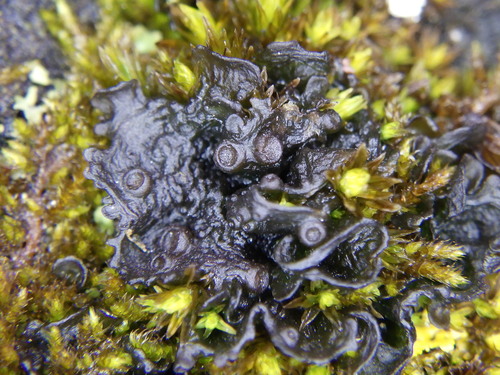
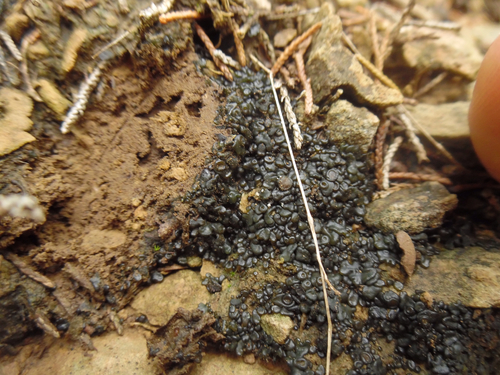
Scytinium fragrans, commonly known as almeglye, is a critically endangered lichen species belonging to the family Collemataceae. This gelatinous lichen forms small, dark olive-green to blackish crusts or patches on its substrate, with a distinctive jelly-like consistency when wet that becomes brittle and inconspicuous when dry. The thallus typically measures 1-3 centimeters across and exhibits the characteristic cyanobacterial photobiont that gives Collemataceae lichens their unique texture and ecological properties.
Almeglye is endemic to specific microhabitats in northern European regions, particularly found on calcareous rocks and old mortar in coastal and near-coastal environments. The species demonstrates remarkable specificity for substrates with particular pH levels and mineral compositions, making it highly sensitive to environmental changes. Its distribution appears to be naturally fragmented, with confirmed populations documented in Norway and possibly extending to similar habitats in Scotland and northern England.
The lichen's reproductive strategy relies primarily on vegetative propagation through fragmentation, as sexual reproduction appears to be rare in remaining populations. Despite its Critically Endangered status under IUCN classification, recent targeted surveys have successfully relocated several historical populations previously thought extinct, offering hope for the species' persistence. Conservation efforts have benefited from improved identification techniques and increased awareness among lichenologists, leading to better monitoring protocols.
The species serves as an important indicator of ecosystem health in its specialized coastal rock habitats, and its presence suggests well-preserved historical environmental conditions that support other rare cryptogamic species.
The primary threats to Scytinium fragrans stem from coastal development and infrastructure modernization that destroys its specific substrate requirements, particularly the replacement of traditional lime mortar with modern cement-based materials. Air pollution, especially nitrogen deposition from maritime traffic and coastal industrial activities, alters the delicate chemical balance of its rock substrates and disrupts the symbiotic relationship between the fungal and cyanobacterial components. Climate change poses an additional threat through increased storm intensity and sea-level rise affecting coastal rock stability, while changing precipitation patterns disrupt the moisture cycles essential for this gelatinous lichen's metabolic processes.
Habitat
Almeglye inhabits calcareous rock faces, old stone walls, and historic mortar in coastal and near-coastal environments, typically within 10 kilometers of the sea. The species requires substrates with specific mineral compositions and pH levels, favoring north-facing or shaded surfaces that maintain consistent moisture levels while avoiding direct salt spray exposure.
Other threatened species in Collemataceae

Frequently asked questions
Why is Scytinium fragrans classified as Critically Endangered?
Where does Scytinium fragrans live?
What are the main threats to Scytinium fragrans?
Get weekly conservation intelligence
One short digest a week of the most striking species and country data we ship, plus breaking conservation news paired with our database where it matters.
Free, no spam. One-click unsubscribe in every email.