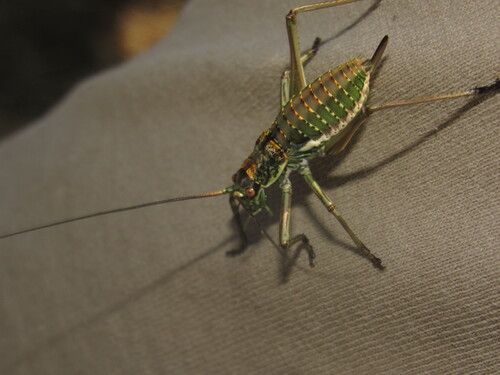
Albanian Saddle Bush-cricket
Uromenus dyrrhachiacus
Photo: (c) wouterh, some rights reserved (CC BY-NC), uploaded by wouterh
Overview
Uromenus dyrrhachiacus is a critically endangered katydid species endemic to the Mediterranean coastal regions of Albania and Montenegro. This distinctive orthopteran belongs to the family Tettigoniidae and represents one of the most threatened insect species in the Balkans. The species exhibits the characteristic elongated antennae and powerful hind legs typical of bush crickets, with a robust brown-green coloration that provides camouflage among Mediterranean scrubland vegetation.
Adults typically measure 25-35mm in length, with females displaying a prominent ovipositor used for depositing eggs in soil or plant material. Uromenus dyrrhachiacus inhabits coastal Mediterranean scrublands, rocky hillsides, and degraded maquis vegetation between sea level and 300 meters elevation. The species shows a strong preference for areas with scattered shrubs, particularly those dominated by aromatic plants like rosemary, thyme, and sage.
Its extremely limited geographic range encompasses less than 100 square kilometers along the Adriatic coast, making it one of the most range-restricted katydids in Europe. The species is classified as Critically Endangered by the IUCN due to its tiny population size, severely fragmented habitat, and ongoing decline. Males produce distinctive stridulation calls during summer months, though the acoustic signature differs markedly from related Uromenus species.
Recent conservation efforts have included habitat mapping and population monitoring by regional entomological societies, while several key sites have received protection status under national biodiversity legislation. Collaborative research between Albanian and Montenegrin institutions has improved understanding of the species' ecological requirements, providing hope for targeted conservation interventions.
Uromenus dyrrhachiacus faces severe pressure from coastal tourism development, which has eliminated much of its specialized scrubland habitat through hotel construction and infrastructure expansion. Agricultural intensification and overgrazing by livestock have degraded remaining habitat patches, while frequent wildfires exacerbated by climate change pose an increasing threat to the species' small, isolated populations. The introduction of invasive plant species along the Mediterranean coast has altered the native vegetation structure essential for the katydid's survival and reproduction.
Habitat
This species inhabits Mediterranean coastal scrublands and rocky hillsides with sparse vegetation, typically found in areas with aromatic shrubs like rosemary and thyme between sea level and 300 meters elevation. The katydid requires a mosaic of open ground and low shrubs that characterizes degraded maquis vegetation along the Adriatic coastline.
Conservation measures underway
Other threatened species in TETTIGONIIDAE
Threatened in Albania

Frequently asked questions
Why is Albanian Saddle Bush-cricket classified as Critically Endangered?
Where does Albanian Saddle Bush-cricket live?
What are the main threats to Albanian Saddle Bush-cricket?
Get weekly conservation intelligence
One short digest a week of the most striking species and country data we ship, plus breaking conservation news paired with our database where it matters.
Free, no spam. One-click unsubscribe in every email.