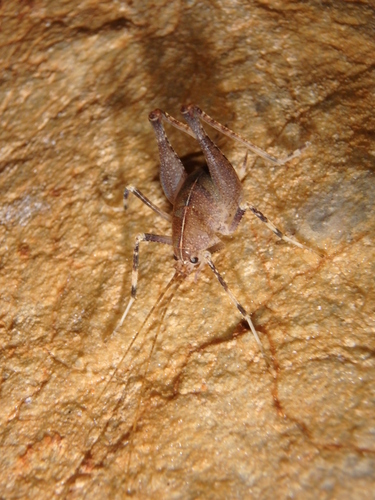
Alanya Cave Cricket
Troglophilus alanyaensis
Photo: Photo: (c) Krylenko VV, some rights reserved (CC BY-NC), uploaded by Krylenko VV
Overview
The Alanya Cave Cricket is a specialized subterranean insect endemic to cave systems in Turkey's Antalya Province. This pale, elongated cricket exhibits typical cave-adapted features including reduced pigmentation, enlarged antennae, and enhanced sensory capabilities for navigating in complete darkness. Like other cave crickets, it likely feeds on organic matter, fungi, and detritus that accumulates in cave environments, playing a crucial role in nutrient cycling within these isolated ecosystems.
This species is restricted to limestone caves near Alanya on Turkey's Mediterranean coast. Cave-dwelling crickets are particularly vulnerable to environmental changes due to their highly specialized habitat requirements and limited dispersal abilities. The stable temperature and humidity conditions of caves are essential for their survival.
The species' Critically Endangered status reflects the extreme vulnerability of cave ecosystems to human disturbance. Cave systems in the Alanya region face pressure from tourism development, as the area is a popular Mediterranean resort destination. Cave modification for tourist access, pollution from surface activities, and groundwater contamination pose significant risks.
Additionally, the species' restricted range means that impacts to even a single cave system could affect the entire population.
Current conservation measures and population monitoring efforts for this species are not well-documented in available assessments. The lack of comprehensive threat assessment and population data indicates limited research attention, which is common for many cave-endemic invertebrates.
Without targeted conservation intervention and habitat protection, the outlook for this highly specialized species remains precarious, particularly given ongoing coastal development pressures in the region.
The specific threats to the Alanya Cave Cricket have not been assessed or documented by researchers. Without a formal threat assessment, it's unclear what dangers this cave-dwelling species may be facing in its underground habitat in Turkey. The status of threats to this species - whether they are getting worse, staying the same, or improving - cannot be determined without proper scientific evaluation.
Habitat
Conservation measures underway
Other threatened species in RHAPHIDOPHORIDAE


Threatened in Türkiye

Frequently asked questions
Why is Alanya Cave Cricket classified as Critically Endangered?
Where does Alanya Cave Cricket live?
What are the main threats to Alanya Cave Cricket?
Get weekly conservation intelligence
One short digest a week of the most striking species and country data we ship, plus breaking conservation news paired with our database where it matters.
Free, no spam. One-click unsubscribe in every email.