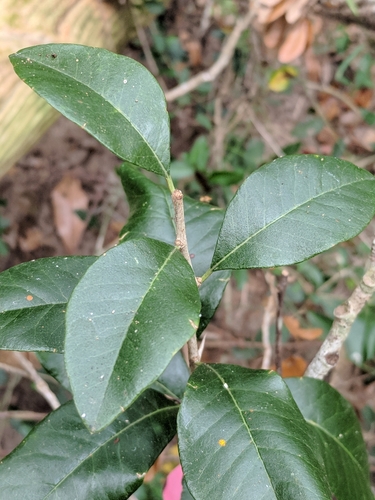
Alachua Sink Buckthorn
Sideroxylon alachuense
Photo: Photo: (c) Joshua Doby, some rights reserved (CC BY-NC), uploaded by Joshua Doby
Overview
Sideroxylon alachuense, a member of the sapodilla family (Sapotaceae), stands as one of Florida's most imperiled endemic trees. This rare species is classified as Critically Endangered (CR) by the IUCN, reflecting its extremely limited distribution and ongoing population decline. The tree typically reaches heights of 15-25 feet at maturity, developing a distinctive rounded crown with dense, leathery leaves that display a characteristic dark green upper surface and lighter underside.
Small, inconspicuous white to yellowish flowers appear in clusters along the branches, eventually producing small, fleshy fruits that serve as food sources for local wildlife. Endemic to a handful of counties in north-central Florida, this species occupies specialized habitats within the state's unique scrubland ecosystems, particularly areas with well-drained, sandy soils derived from ancient marine deposits. The tree demonstrates remarkable adaptation to Florida's fire-prone landscapes, with the ability to resprout from its root system following low-intensity burns.
Current population estimates suggest fewer than 1,000 mature individuals remain in the wild, distributed across highly fragmented locations. Despite its precarious status, recent conservation efforts have shown promise, including successful propagation programs at botanical institutions and the establishment of protected populations within state conservation areas. Land managers have also implemented targeted habitat restoration techniques that have benefited existing populations, demonstrating that with continued dedicated conservation action, this remarkable Florida endemic can persist for future generations.
Urban development and agricultural conversion pose the primary threats to Sideroxylon alachuense, as its native scrubland habitat occurs in areas experiencing rapid human population growth throughout north-central Florida. Fire suppression has fundamentally altered the natural disturbance regime these trees depend upon, leading to habitat degradation through woody encroachment and changes in understory composition. Invasive plant species, particularly aggressive exotic shrubs and grasses, compete directly with young trees for resources and alter soil chemistry in ways that disadvantage native scrub vegetation.
Habitat
Sideroxylon alachuense inhabits Florida's distinctive scrubland ecosystems, specifically areas characterized by deep, well-drained sandy soils and open canopy conditions maintained by periodic natural fires. These specialized habitats typically occur on ancient sand ridges and dunes, where the species grows alongside other endemic scrub plants adapted to the nutrient-poor, drought-prone conditions.
Conservation measures underway
Other threatened species in SAPOTACEAE
Frequently asked questions
Why is Alachua Sink Buckthorn classified as Critically Endangered?
Where does Alachua Sink Buckthorn live?
What are the main threats to Alachua Sink Buckthorn?
Get weekly conservation intelligence
One short digest a week of the most striking species and country data we ship, plus breaking conservation news paired with our database where it matters.
Free, no spam. One-click unsubscribe in every email.