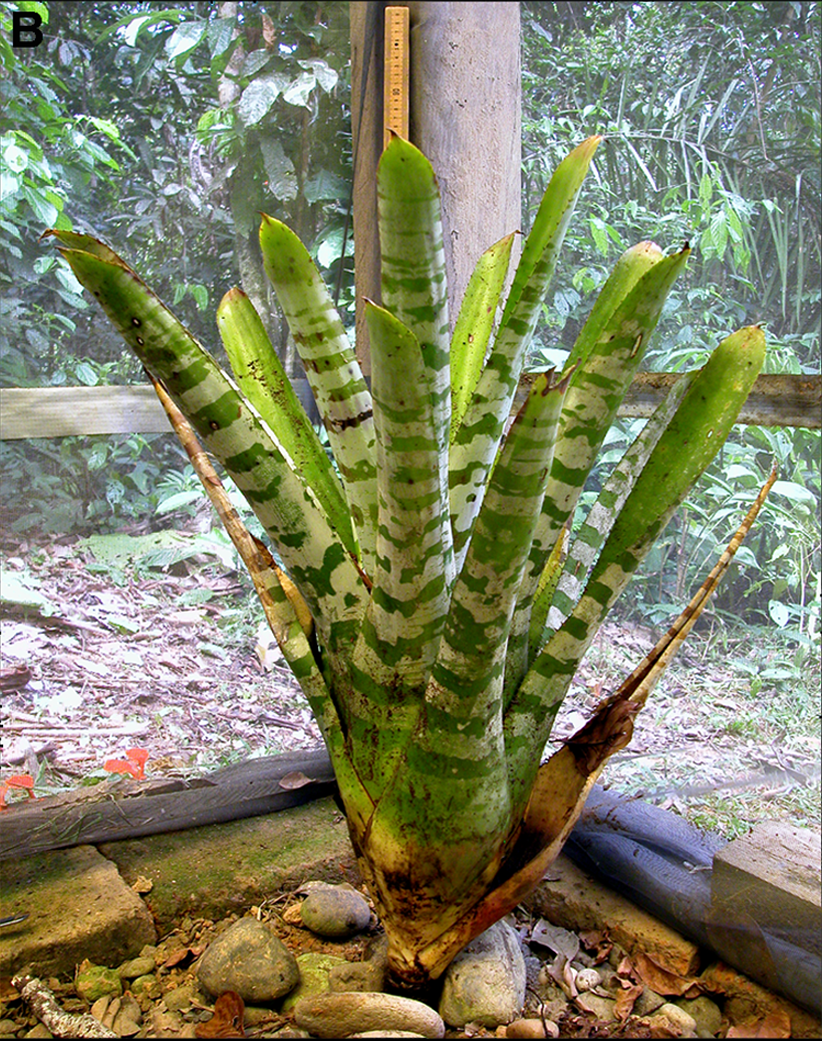
Aechmea zebrina
Photo: Wikimedia Commons (CC) via https://en.wikipedia.org/wiki/Aechmea_zebrina
Overview
A detailed profile for this species is sourced from the IUCN Red List of Threatened Species as assessments become available.
Aechmea zebrina faces severe pressure from deforestation and habitat fragmentation across its limited range in Brazil's Atlantic Forest. Urban expansion and agricultural conversion have eliminated much of its epiphytic habitat, while collection for the ornamental plant trade has further reduced wild populations. Climate change poses an additional threat by altering the humid microclimate conditions this bromeliad requires for survival.
Habitat
This epiphytic bromeliad inhabits the humid Atlantic Forest of southeastern Brazil, growing on tree trunks and branches in both primary and secondary forest formations. It typically occurs at elevations between 200-800 meters in areas with consistent moisture and filtered sunlight.
Other threatened species in Bromeliaceae

Frequently asked questions
Why is Aechmea zebrina classified as Endangered?
Where does Aechmea zebrina live?
What are the main threats to Aechmea zebrina?
Get weekly conservation intelligence
One short digest a week of the most striking species and country data we ship, plus breaking conservation news paired with our database where it matters.
Free, no spam. One-click unsubscribe in every email.