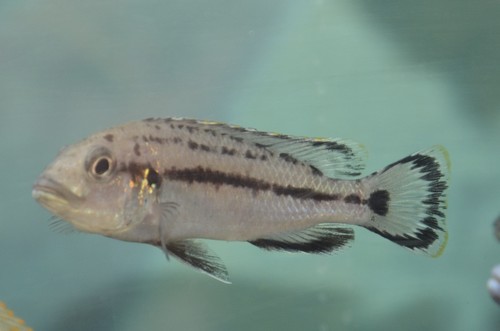
Melanochromis lepidiadaptes
Photo: (c) dguenther, some rights reserved (CC BY-NC-SA)
Overview
Melanochromis lepidiadaptes is a critically endangered cichlid fish endemic to Lake Malawi in East Africa. This freshwater species belongs to the diverse mbuna group of rock-dwelling cichlids that have undergone extensive adaptive radiation within the lake system. Like other Melanochromis species, it exhibits sexual dimorphism with distinct coloration patterns between males and females.
The species occupies specific rocky habitat zones within Lake Malawi, where it feeds primarily on algae and small invertebrates found on rock surfaces. Its restricted distribution and specialized habitat requirements make it particularly vulnerable to environmental changes. The primary threats to M.
lepidiadaptes include habitat degradation from increased sedimentation, pollution from agricultural runoff and urban development, and overfishing pressure from both subsistence and ornamental fish trade. Climate change poses additional risks through potential alterations to lake water levels and temperature regimes. The species also faces threats from invasive species and hybridization with closely related cichlids.
Conservation efforts for this species are limited, though it benefits from broader Lake Malawi ecosystem protection initiatives. The lake's designation as a UNESCO World Heritage Site provides some level of protection, but enforcement remains challenging. Research on the species' ecology and population status is needed to develop targeted conservation strategies.
Community-based conservation programs and sustainable fishing practices are essential for the long-term survival of this and other endemic Lake Malawi cichlids.
Melanochromis lepidiadaptes faces severe threats from habitat degradation caused by sedimentation and pollution from agricultural and urban sources around Lake Malawi. Overfishing pressure from both local subsistence fishing and the aquarium trade further threatens the already vulnerable population. Climate change and invasive species present additional risks to this specialized rock-dwelling cichlid.
Habitat
This species inhabits rocky areas in Lake Malawi, where it lives among boulder fields and rocky shorelines. It occupies specific depth zones within the lake's clear, alkaline waters, feeding on algae and small organisms growing on rock surfaces.
Other threatened species in CICHLIDAE

Threatened in Malawi


Frequently asked questions
Why is Melanochromis lepidiadaptes classified as Critically Endangered?
Where does Melanochromis lepidiadaptes live?
What are the main threats to Melanochromis lepidiadaptes?
Get weekly conservation intelligence
One short digest a week of the most striking species and country data we ship, plus breaking conservation news paired with our database where it matters.
Free, no spam. One-click unsubscribe in every email.