Nepal's Slaty-bellied Tesia Faces Critical Threat
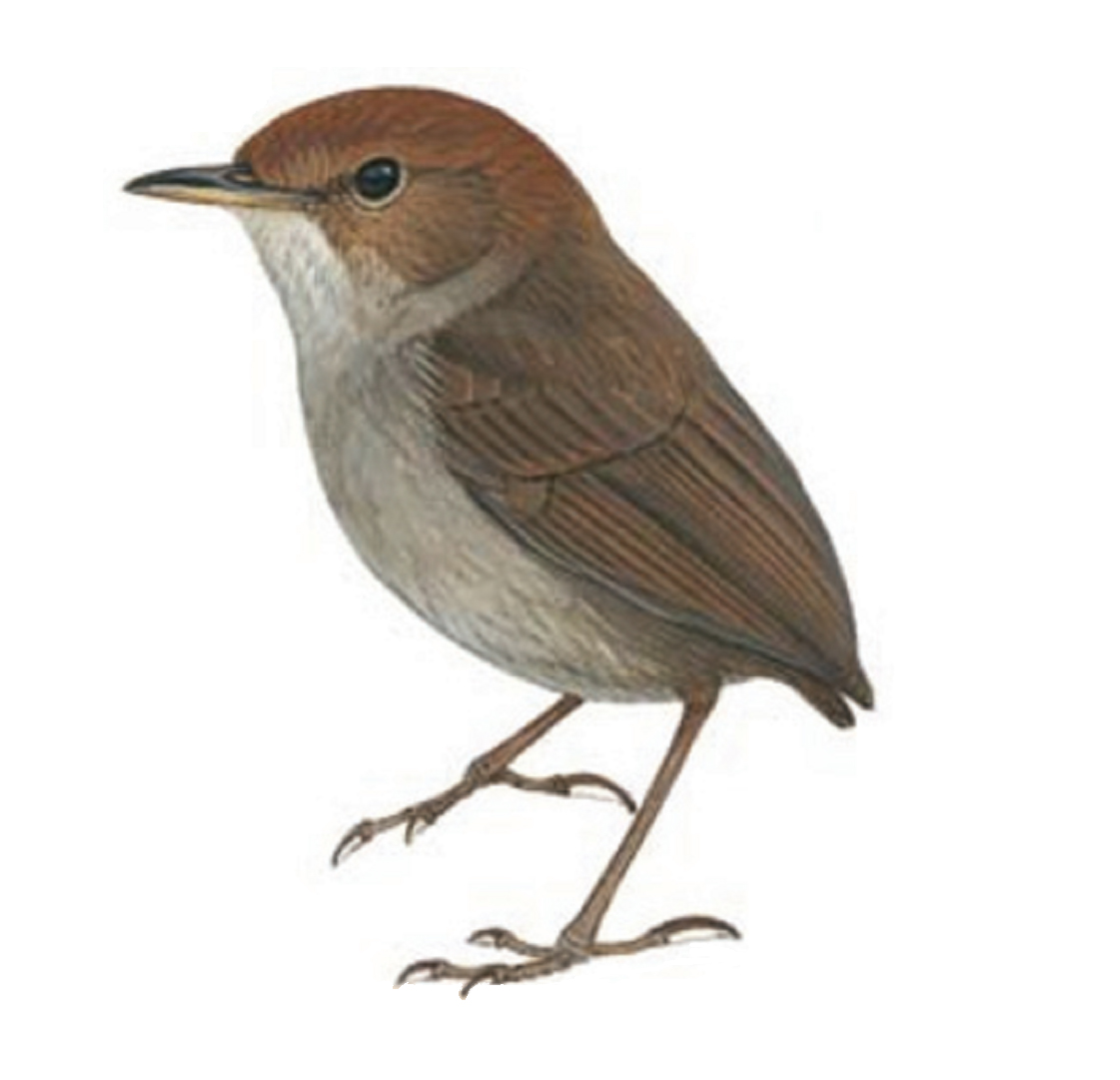
Why Nepal's Tiny Slaty-bellied Tesia Faces Critical Threat Despite Global Safety
Deep in the misty undergrowth of Nepal's temperate forests, a sparrow-sized bird with an outsized conservation challenge quietly searches for insects among the leaf litter. The Slaty-bellied Tesia (Tesia olivea) presents one of the most striking examples of how a species can simultaneously be thriving globally while teetering on the brink of extinction locally.
According to the National Red List of Nepal's Birds compiled by Baral et al. and published by Himalayan Nature & Bird Conservation Nepal (BCN), the Slaty-bellied Tesia carries a Critically Endangered (CR) status within Nepal's borders. Yet globally, the International Union for Conservation of Nature (IUCN) Red List classifies this same species as Least Concern (LC) – a conservation paradox that reveals the complex nature of modern biodiversity protection.
The Global Picture vs. Local Reality
This dramatic divergence in conservation status isn't uncommon in the bird world, but it highlights a crucial aspect of species conservation that often gets overlooked. While the Slaty-bellied Tesia enjoys stable populations across its broader range – which extends through the Himalayas and into Southeast Asia – the story in Nepal tells a very different tale.
The species' global Least Concern status reflects its presence across multiple countries and diverse habitats throughout its range. When IUCN assessors evaluate a species globally, they consider the entire population across all countries where it occurs. For the Slaty-bellied Tesia, this includes relatively stable populations in regions like Myanmar, Thailand, and parts of China, where suitable habitat remains more abundant.
| Assessment Level | Conservation Status | Population Trend | Primary Factors |
|---|---|---|---|
| Global (IUCN) | Least Concern (LC) | Stable | Widespread range, stable populations in multiple countries |
| Nepal National | Critically Endangered (CR) | Declining | Habitat loss, fragmentation, climate change |
| Local Populations | Variable | Unknown | Limited research, habitat-dependent |
Why Nepal Tells a Different Story
Nepal's Critically Endangered classification, as documented in the National Red List of Nepal's Birds, reflects the species' precarious situation within the country's specific environmental and geographic context. Several factors contribute to this alarming local status:
Habitat Fragmentation and Loss
The Slaty-bellied Tesia requires dense, humid undergrowth in temperate broadleaf forests – exactly the type of habitat under intense pressure in Nepal's rapidly developing landscape. These birds depend on the complex understory structure found in primary and mature secondary forests, where they forage for small insects and spiders among fallen leaves and low vegetation.
Nepal's middle hills, where these forests historically thrived, have experienced extensive deforestation and habitat conversion. Agricultural expansion, infrastructure development, and human settlement have fragmented the continuous forest blocks that these small, non-migratory birds require.
Climate Change Pressures
As a species adapted to specific temperature and humidity ranges, the Slaty-bellied Tesia faces additional pressure from changing climate patterns in the Himalayas. Rising temperatures are pushing suitable habitat to higher elevations, but Nepal's topography limits the availability of appropriate habitat at these altitudes.
Limited Range Within Nepal
While the species may be widespread globally, its distribution within Nepal appears to be naturally restricted to specific elevation zones and forest types. This limited range makes the local population particularly vulnerable to any threats that affect their preferred habitat.
The Conservation Science Behind Status Assessments
The divergence between global and national conservation status reflects different assessment criteria and population scales. Global IUCN assessments consider:
- Total global population size and trends
- Overall range size across all countries
- Threats affecting the species throughout its entire distribution
- Population connectivity between regions
National assessments, like Nepal's Red List, focus on:
- Population size and trends within national borders
- Habitat availability and quality within the country
- Local threats and their intensity
- The species' ecological and cultural importance nationally
Source: Nepal Forest Resources Assessment
Implications for Conservation Strategy
This status divergence has profound implications for conservation prioritization and resource allocation. While international funding and attention often flow toward globally threatened species, the Slaty-bellied Tesia's situation demonstrates why national and local conservation assessments remain crucial.
For Nepal, the Critically Endangered status should trigger immediate conservation action, including:
- Habitat protection in remaining suitable areas
- Forest restoration programs targeting appropriate elevation zones
- Research to better understand local population dynamics and specific habitat requirements
- Integration of the species into broader landscape conservation planning
A Window into Broader Conservation Challenges
The Slaty-bellied Tesia's story reflects a broader pattern affecting many Himalayan species. As climate change and development pressure intensify, species that appear secure globally may face extinction at regional or national levels. These local extinctions contribute to the overall erosion of biodiversity, even when global populations remain stable.
Furthermore, local extinctions can have cascading effects on ecosystem function and may eliminate genetically distinct populations that represent important evolutionary diversity within the species.
The Path Forward
Conservation success for species like the Slaty-bellied Tesia requires recognition that global stability doesn't guarantee local security. National Red Lists serve as early warning systems, identifying species in trouble before global populations decline to concerning levels.
For Nepal's Slaty-bellied Tesia, immediate action focused on habitat protection and restoration could prevent a local extinction that would diminish both the country's biodiversity and the species' global genetic diversity.
The tiny Slaty-bellied Tesia reminds us that in conservation, every population matters – and that protecting biodiversity requires attention to both global patterns and local realities. By tracking species status at multiple scales, platforms like SpeciesRadar help ensure that conservation efforts address threats wherever they occur, from global to local levels.
Explore more on SpeciesRadar: Cinchona nitida and the Nepal biodiversity dashboard.
Frequently Asked Questions
What makes the Slaty-bellied Tesia critically endangered in Nepal but not globally?
The species has stable populations across its broader range in Southeast Asia and other Himalayan regions, but faces severe habitat loss and fragmentation specifically within Nepal's borders, making the local population critically vulnerable.
How small is the Slaty-bellied Tesia and where does it live?
This sparrow-sized bird inhabits the dense understory of temperate broadleaf forests, typically at middle elevations where it forages for insects among leaf litter and low vegetation.
What specific threats does this species face in Nepal?
Primary threats include deforestation for agriculture and development, habitat fragmentation, climate change pushing suitable habitat to higher elevations, and the species' naturally limited range within the country.
Why are national Red Lists important if global assessments already exist?
National assessments identify species in local trouble before global declines occur, serving as early warning systems and helping prioritize conservation resources where threats are most immediate.
What conservation actions could help save Nepal's Slaty-bellied Tesia population?
Key actions include protecting remaining suitable forest habitat, implementing restoration programs in appropriate elevation zones, conducting population research, and integrating the species into broader landscape conservation planning.