Mekong Giant Catfish: River Collapse Symbol
An 81% Collapse, Measured in Rivers Worldwide
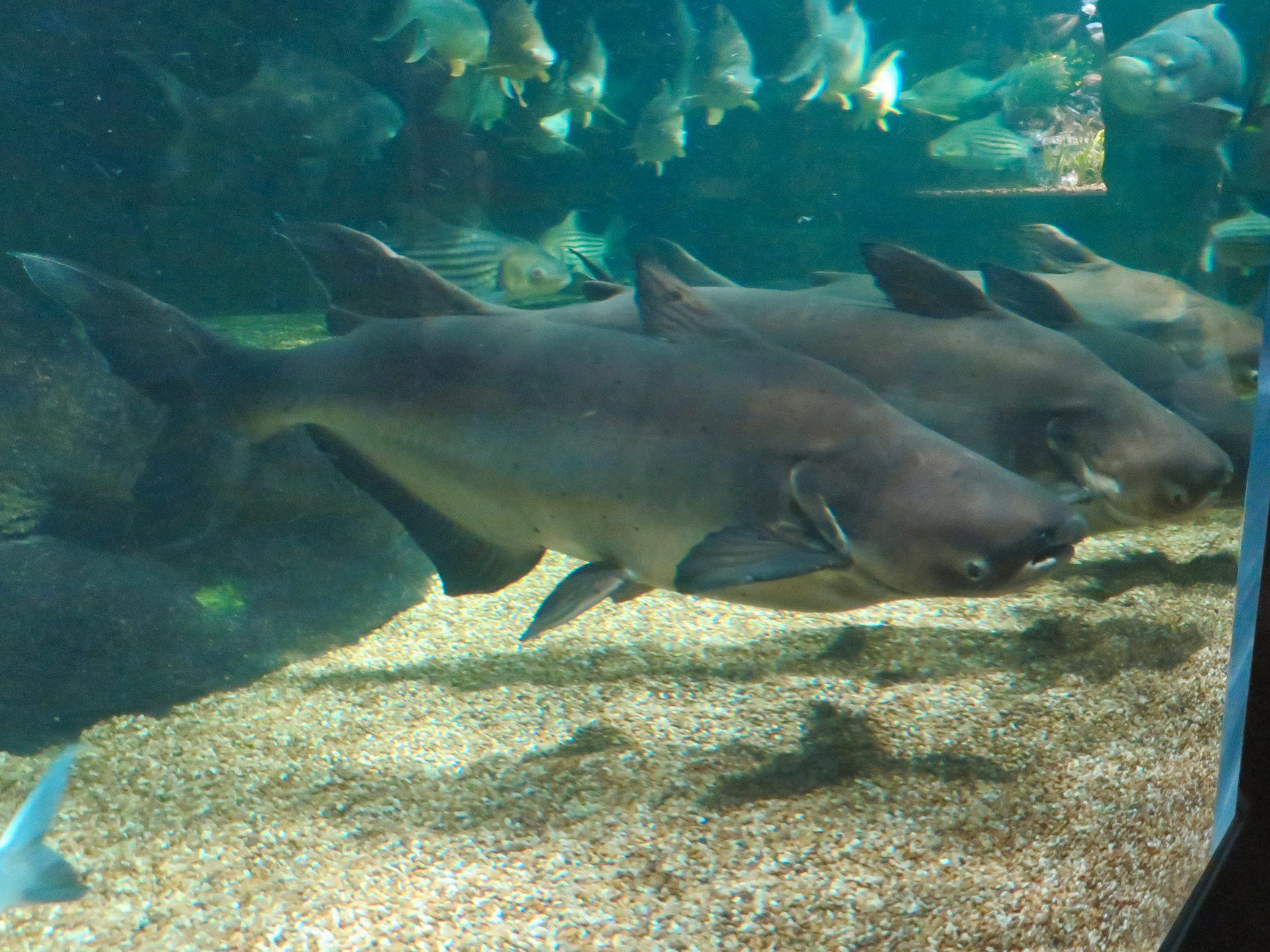
A new global assessment from the UN Convention on Migratory Species has delivered a sobering verdict: migratory freshwater fish populations have fallen by 81% since 1970. The report, unveiled at COP15 in Brazil, names the Mekong giant catfish (Pangasianodon gigas) as the emblem of this decline — a fish so large it once anchored entire fishing economies, now reduced to a scattering of survivors in a river system reshaped by dams, sediment extraction, and warming water.
The Mekong giant catfish carries a Critically Endangered listing on the IUCN Red List, the last category before extinction in the wild. According to the Circle of Blue report on the global collapse of migratory freshwater fish species, the new CMS data identifies 325 freshwater fish species in need of urgent, coordinated conservation action — many of them, like the catfish, dependent on free-flowing rivers that cross national borders.
Key Finding: Migratory freshwater fish populations have declined 81% globally since 1970, and the Mekong giant catfish — Critically Endangered on the IUCN Red List — is cited as the report's defining case study of that collapse.

What This Means for the Species
The Mekong giant catfish is not just another casualty on a long list — it is a biological signal of how badly the river itself is faring. Native to the Mekong basin across Southeast Asia and adjacent China, the species can grow to enormous size, and its survival has always depended on an uninterrupted migratory corridor stretching hundreds of kilometers between feeding grounds and spawning sites.
That corridor has been fractured. You can review the species' full profile on its SpeciesRadar page, where the threat picture is consistent with what the new CMS report describes at a global scale:
- Dam construction across the Mekong mainstream and its tributaries blocks the migration routes the catfish needs to reach spawning grounds, severing a life cycle that evolved around seasonal river connectivity.
- Overfishing, both targeted and incidental, has stripped remaining populations down to fragments, with mature adults increasingly rare in fishery catches.
- Habitat degradation from pollution, sand mining, and agricultural runoff has degraded water quality in the nursery habitats juveniles depend on.
- Climate-driven shifts in flooding patterns are altering the seasonal cues the species relies on to time reproduction, compounding the damage already done by infrastructure and extraction.
Each of these pressures alone would be serious. Together, they explain why a species that once supported subsistence and commercial fisheries across multiple countries has become a byword for freshwater collapse.
Why Freshwater Fish Are Falling Faster Than Almost Anything Else
Freshwater ecosystems cover a tiny fraction of the planet's surface but host a disproportionate share of its vertebrate biodiversity — and they are degrading faster than almost any other habitat type. Rivers are also uniquely vulnerable to a problem land and ocean species rarely face in the same way: fragmentation. A single dam, a single stretch of dredged riverbed, or a single diversion for irrigation can sever a migratory species' access to the habitat it needs at a different life stage, even if the rest of its range remains intact.
The CMS report's 325-species list reflects this reality. Migratory freshwater fish — unlike many land mammals — cannot simply range around an obstacle. They need rivers that stay connected from source to sea, across however many national boundaries separate the two. That is precisely why the report's authors are calling for transboundary cooperation rather than country-by-country conservation plans. The Mekong basin, shared by China, Myanmar, Laos, Thailand, Cambodia, and Vietnam, is a textbook case: no single government can unilaterally restore the migratory connectivity the catfish needs.

A Pattern Beyond the Mekong
This is not an isolated story. Globally, migratory fish populations have been declining for decades as rivers have been dammed, channelized, and depleted of water for agriculture and cities. The new 81% figure places freshwater migratory fish among the steepest-declining vertebrate groups measured anywhere, surpassing comparable indices for migratory birds and land mammals. Conservationists increasingly argue that river systems deserve the same cross-border coordination mechanisms that have been built for ocean fisheries and migratory bird flyways.
Outlook: Can Cooperation Catch Up With Collapse?
The CMS report frames transboundary cooperation as the central remedy — coordinated dam planning, fish passage requirements, shared water allocation agreements, and joint monitoring across the Mekong's six riparian nations. None of this is simple. Hydropower remains central to regional energy strategy, and sand mining and agricultural expansion are tied to local economies that are hard to redirect quickly.
Still, the report's release at COP15 signals that freshwater migratory species are finally being treated as a global priority rather than a series of isolated national problems. For the Mekong giant catfish, already down to a remnant population, the margin for further delay is vanishingly thin. Whether the countries that share the river can act in concert — on dam design, fishing restrictions, and habitat restoration — may determine whether the species becomes a cautionary tale or a rare reversal.
Frequently Asked Questions
What is the IUCN status of the Mekong giant catfish?
The Mekong giant catfish is listed as Critically Endangered, the most severe category before a species is considered extinct in the wild.
Why was the Mekong giant catfish singled out in the new report?
The UN CMS report uses the species as an emblematic case of the broader 81% collapse in migratory freshwater fish populations since 1970, largely because its migration-dependent life cycle has been devastated by dams and habitat loss.
How many freshwater fish species does the report say need urgent action?
The report identifies 325 freshwater fish species requiring urgent, coordinated conservation measures.
What is the main solution proposed in the report?
Transboundary cooperation among countries that share river basins, including coordinated dam planning, fish passage measures, and joint monitoring, since migratory species cannot be protected through isolated national actions alone.
Get weekly conservation intelligence
One short digest a week of the most striking species and country data we ship, plus breaking conservation news paired with our database where it matters.
Free, no spam. One-click unsubscribe in every email.