Horseshoe Crab Endangered Species Act Lawsuit Explained

A legal fight over a 450-million-year-old survivor
The American horseshoe crab has outlasted mass extinctions, ice ages, and the rise and fall of the dinosaurs. What it may not outlast, conservationists argue, is bureaucratic delay. The Center for Biological Diversity has filed suit against the federal government, alleging that regulators failed to act on scientific evidence showing steep population declines in the species, despite repeated petitions to list it under the Endangered Species Act. The case, first reported by WBUR's Here & Now, centers on whether federal wildlife agencies ignored their own scientists' warnings about a creature whose blue, copper-based blood remains critical to modern medicine and whose eggs sustain migratory shorebirds along the Atlantic coast.
The lawsuit does not concern a single, isolated population. Horseshoe crabs are harvested commercially for bait and bled for pharmaceutical testing, and advocates say both pressures have pushed numbers down faster than management plans have adapted. The legal filing argues that the government's own status reviews acknowledged declining trends yet stopped short of granting protected status — a gap that, if true, would leave one of the ocean's oldest lineages without the safeguards that an endangered listing provides.
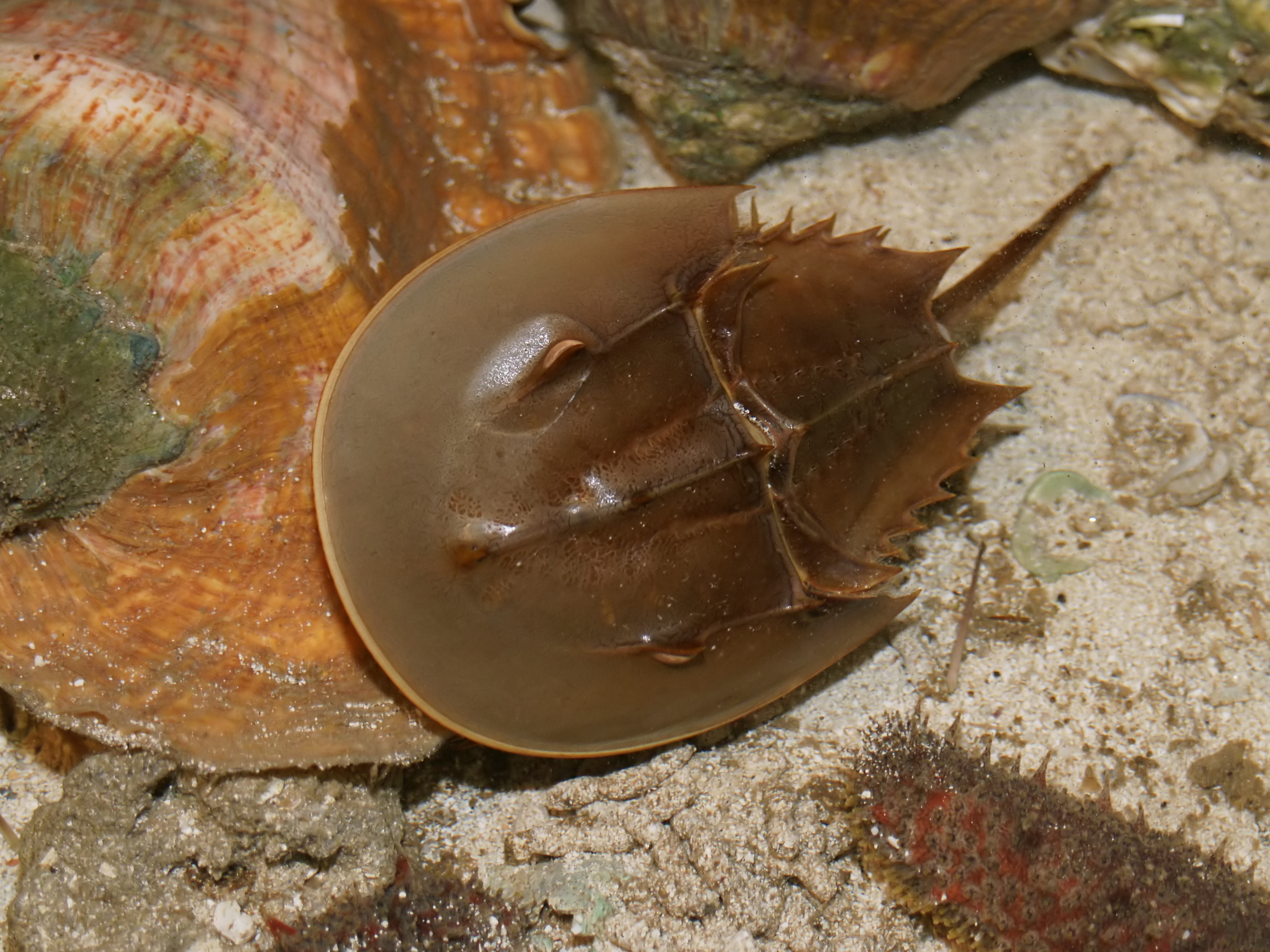
What this means for horseshoe crabs worldwide
While the American horseshoe crab (Limulus polyphemus) is the subject of this particular lawsuit, the legal and scientific scrutiny arrives amid growing global concern for horseshoe crabs generally. Four species remain on Earth, and all face some combination of habitat loss, overharvesting, and reduced breeding success. The Tri-spine Horseshoe Crab (Tachypleus tridentatus), found across coastal Asia from Japan to Indonesia, is already classified as Endangered on the IUCN Red List — a designation the American species has so far not received despite the concerns raised in the new suit.
The parallel is instructive. Both species depend on undisturbed, sediment-rich shorelines for spawning, and both have been squeezed by coastal development, bait fisheries, and, in the case of the Tri-spine, land reclamation projects that have erased nesting beaches across its range. You can explore the species' full profile and regional data on its Tri-spine Horseshoe Crab species page, which tracks its Endangered status alongside the pressures driving that classification.
Why horseshoe crab blood matters
Horseshoe crab blood contains a compound called limulus amebocyte lysate, used for decades to test vaccines, injectable drugs, and medical devices for bacterial contamination. That biomedical demand, layered on top of bait harvesting for eel and conch fisheries, has made horseshoe crabs one of the few living fossils whose survival is entangled directly with modern healthcare supply chains. Conservationists argue that this dual pressure — bait harvest and blood harvest — has never been adequately modeled in the government's population assessments, a claim now central to the Center for Biological Diversity's case.
The wider conservation picture
Horseshoe crabs are not just ecologically important in isolation. Their eggs are a critical food source for shorebirds such as the red knot, whose own migratory survival is closely tied to the timing and abundance of horseshoe crab spawning events. A decline in horseshoe crab numbers ripples outward, affecting bird populations thousands of miles away.
Key pressures facing horseshoe crab species globally include:
- Coastal development and land reclamation that destroys spawning beaches
- Commercial harvesting for bait in eel, whelk, and conch fisheries
- Biomedical bleeding for pharmaceutical safety testing, which causes some mortality even when crabs are released
- Rising sea levels and shoreline armoring that reduce available nesting habitat
- Slow reproductive cycles, since horseshoe crabs take up to a decade to reach breeding maturity, making populations slow to recover from setbacks
That last point is central to why scientists are alarmed. Unlike fast-reproducing species that can rebound within a few seasons, horseshoe crabs mature slowly, meaning any sustained harvest pressure can suppress populations for years before the impact becomes statistically obvious.

Outlook: what the lawsuit could change
If the Center for Biological Diversity prevails, the American horseshoe crab could gain Endangered Species Act protections that would restrict harvest levels, mandate habitat safeguards, and require federal agencies to formally consult on projects affecting its coastal range. Such a listing would mark a significant shift for a species long managed primarily through state-level fishery quotas rather than federal endangered species law.
For the Tri-spine Horseshoe Crab, already recognized as Endangered internationally, the case underscores a pattern seen across the horseshoe crab family: scientific consensus on decline often outpaces regulatory action. Whether courts can close that gap for the American species remains to be seen, but the outcome will likely influence how conservation groups approach similar petitions for horseshoe crab populations elsewhere in the world.
Frequently Asked Questions
Is the horseshoe crab officially endangered in the United States?
Not yet under U.S. federal law. The lawsuit alleges the government has failed to list the American horseshoe crab despite scientific evidence of population decline, but no formal Endangered Species Act listing has been granted as of the filing.
How does this relate to the Tri-spine Horseshoe Crab?
The Tri-spine Horseshoe Crab, a related species found in Asian coastal waters, is already classified as Endangered on the IUCN Red List, illustrating how horseshoe crab populations globally face comparable threats from habitat loss and harvesting.
Why are horseshoe crabs valuable to medicine?
Their blue blood contains a clotting agent used to test vaccines and medical equipment for bacterial contamination, a use that has driven sustained biomedical harvesting alongside commercial bait fishing.
What happens next in the lawsuit?
The case will proceed through federal court, where judges will assess whether wildlife agencies unlawfully delayed or denied protections despite documented population declines, a process that could take months or longer to resolve.
Get weekly conservation intelligence
One short digest a week of the most striking species and country data we ship, plus breaking conservation news paired with our database where it matters.
Free, no spam. One-click unsubscribe in every email.