Fort Worth Zoo Hatches Record Gharial Clutch
A record clutch for one of the world's rarest crocodilians
Eight gharial crocodiles have hatched at the Fort Worth Zoo this summer, the largest single hatching event in the institution's history with this species and its fourth consecutive year of breeding success. The news, first reported by the Fort Worth Report, marks a meaningful gain for a reptile family that has spent decades sliding toward extinction in the wild.
The new arrivals have pushed the zoo's juvenile gharial population from five animals to thirteen — a more than twofold increase in a single season. For a species whose global numbers are measured in the low thousands, that kind of jump inside one accredited facility carries real weight for the broader conservation effort, even though these hatchlings will spend their lives in managed care rather than the rivers of South Asia.
Gharials (Gavialis gangeticus) are instantly recognizable by their impossibly slender, elongated snouts — an adaptation built for snatching fish in fast-moving river currents — and in mature males, a bulbous growth at the tip of the nose called a "ghara." Once found throughout the river systems of the Indian subcontinent, the species has been reduced to fragmented, heavily managed populations, largely due to dam construction, sand mining, entanglement in fishing nets, and the loss of the sandbanks they need for nesting.
Why zoo hatchings matter beyond the exhibit glass
Captive breeding programs like Fort Worth's are coordinated through cooperative management plans that treat the zoo population as a kind of genetic reservoir — a buffer against the volatility of wild populations that remain perilously small and confined to a handful of protected river stretches in India and Nepal. Four straight years of successful hatchings suggests the zoo has cracked key elements of gharial husbandry, including nesting substrate, incubation temperature, and water quality, that have historically made crocodilian breeding in captivity difficult to sustain.

What this means for crocodilian conservation
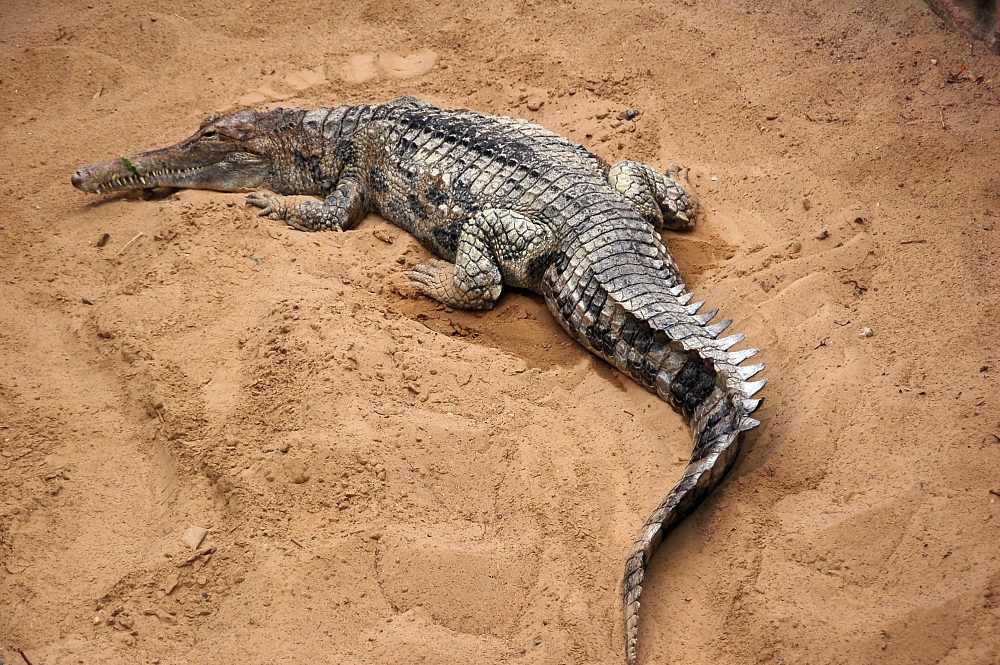
The gharial's plight is often cited alongside that of its less-studied relative, the False Gharial (Tomistoma schlegelii), a long-snouted crocodilian native to the swamps and blackwater rivers of Sumatra, Borneo, and the Malay Peninsula. Despite the similar name and silhouette, the two species are not closely related — convergent evolution shaped both toward the same slender-jawed fishing strategy. The False Gharial is currently listed as Endangered on the IUCN Red List, one category below the true gharial's Critically Endangered status, but it faces comparable pressures: wetland drainage, oil palm conversion, and historic hunting have all chipped away at its habitat across Southeast Asia.
Breeding successes like Fort Worth's offer a useful case study for institutions working with the False Gharial and other rare crocodilians, because the husbandry lessons — nest site design, hatchling rearing protocols, disease management — tend to transfer across species. Zoos and conservation breeding centers in Indonesia and Malaysia have similarly worked to establish assurance populations of Tomistoma, though successful reproduction in managed care has historically been less consistent than with the Indian gharial.
The threats gharials and their relatives still face
Even with captive breeding gains, the underlying pressures on wild gharial and tomistoma populations have not eased substantially. Conservationists point to a consistent set of challenges across both species:
- Habitat fragmentation from dam and barrage construction, which disrupts the river flows and sandbank formation both species depend on for nesting
- Accidental drowning in fishing nets set for commercial catch, which kills adults and juveniles alike
- Sand mining and riverbank development that destroys nesting beaches during the critical egg-laying season
- Pollution and reduced fish stocks, which undercut the specialized diet these narrow-snouted hunters rely on
- Historical hunting for skins and traditional medicine, a pressure that has diminished but left wild populations slow to recover
An outlook built on incremental gains
No single zoo hatching reverses decades of habitat loss, and conservation biologists are careful not to overstate what a batch of thirteen juveniles in Texas means for rivers thousands of miles away. But the cumulative effect of consistent, repeatable breeding success is what keeps assurance colonies viable as a genetic and demographic hedge, should reintroduction opportunities or emergency population support become necessary. Fort Worth's four-year streak suggests the zoo has moved past the unpredictability that often plagues crocodilian breeding programs, turning what was once a rare event into something closer to a dependable annual contribution.
For the False Gharial specifically, the broader lesson is about urgency paired with patience: Endangered species with small, scattered populations benefit disproportionately from any institution — public or private — that can reliably add individuals to a managed population while researchers and governments work on the slower task of restoring river habitat. Every additional hatchling, gharial or tomistoma, buys time.
Methodology note: Data on the False Gharial's IUCN Red List status is drawn from SpeciesRadar's species database (speciesradar.org), which compiles IUCN Red List 2025-2 assessments alongside GBIF occurrence records.
Frequently Asked Questions
What is the difference between a gharial and a False Gharial?
Gharials (Gavialis gangeticus) and False Gharials (Tomistoma schlegelii) both have long, narrow snouts adapted for fishing, but they belong to separate families and evolved their similar shape independently. The true gharial is native to South Asian rivers and is Critically Endangered, while the False Gharial, found in Southeast Asian wetlands, is listed as Endangered.
Why are eight hatchlings considered a record for Fort Worth Zoo?
The Fort Worth Zoo had not previously produced this many gharial hatchlings in a single season, and the event marks its fourth straight year of successful breeding, suggesting the program has stabilized key incubation and nesting conditions.
Can captive-bred gharials or False Gharials be released into the wild?
Reintroduction is possible in principle and has been attempted with gharials in parts of South Asia, but it requires suitable, protected river habitat and careful genetic planning. For now, most zoo-bred individuals serve as an assurance population rather than immediate candidates for release.
Is the False Gharial also part of coordinated zoo breeding programs?
Yes, several institutions in Southeast Asia and elsewhere maintain Tomistoma in managed breeding programs, though consistent reproductive success has historically been harder to achieve than with the true gharial.
Get weekly conservation intelligence
One short digest a week of the most striking species and country data we ship, plus breaking conservation news paired with our database where it matters.
Free, no spam. One-click unsubscribe in every email.