Red-Legged Frog: Zoo Builds a Wild Waystation
A Frog Nursery Opens in Santa Barbara
Every winter, gelatinous clumps of frog eggs appear tethered to submerged vegetation in the creeks that wind through the Santa Monica Mountains. Most years, those egg masses face brutal odds — drought, non-native predators, and disease conspire to keep survival rates low. This year, some of those eggs got an assist.
Staff at the Santa Barbara Zoo have begun collecting California red-legged frog egg masses from local waterways, rearing the tadpoles behind the scenes, and releasing the resulting juvenile frogs back into their native streams. The effort, launched as a new partnership with a university research team, is designed to give one of the West Coast's most storied amphibians a head start against threats that have hammered its populations for decades.
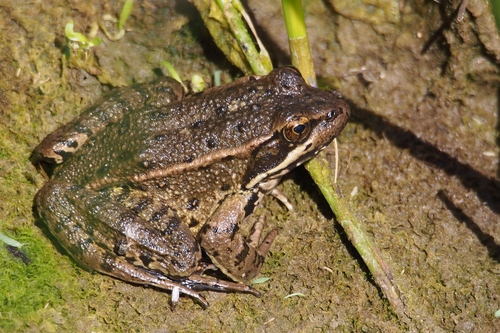
The California red-legged frog (Rana draytonii) is the largest native frog in the western United States and the species famously linked to Mark Twain's "The Celebrated Jumping Frog of Calaveras County." It is currently listed as Vulnerable on the IUCN Red List, and it holds federal threatened species status under U.S. law — protections that reflect a long, steady contraction of its range across California and northern Baja California. You can find its full species profile, including its conservation history, at Drayton's frog.

What This Reintroduction Effort Actually Involves
Unlike a one-off captive breeding release, the zoo's programme functions more like a seasonal waystation — a temporary, protected stopover between the vulnerable egg stage and a juvenile frog's return to the wild. According to the Santa Barbara Independent's coverage of the project, zoo staff and university researchers gather naturally laid egg masses from local creeks rather than relying solely on captive-bred adults, then raise the tadpoles in controlled conditions before releasing them back into the Santa Monica Mountains once they've matured past the most predator-vulnerable life stages.
This approach matters because red-legged frog eggs and tadpoles are disproportionately exposed to hazards in the wild — desiccating pools during drought years, ambush from introduced bullfrogs, and predation by non-native fish species that were never part of the ecosystem the frog evolved in. By pulling egg masses into a controlled environment for the riskiest weeks of development, conservationists can dramatically improve the odds that a given clutch produces frogs that actually reach breeding age.
Why the Species Needs the Boost
The California red-legged frog's decline traces back more than a century, but the pressures compounding today are distinct from those of the past:
- Habitat loss — Wetlands and slow-moving streams across California have been drained or converted for urban development and agriculture, eliminating the still, vegetated water the species needs to breed.
- Invasive predators — American bullfrogs and non-native fish species, introduced for sport or accidentally established, prey heavily on red-legged frog eggs, tadpoles, and juveniles.
- Disease — Chytrid fungus, a pathogen responsible for amphibian collapses worldwide, has been detected in California populations and continues to threaten survivors even where habitat is otherwise intact.
- Fragmented range — Populations that once moved freely between watersheds are now often isolated in small, disconnected pockets, limiting genetic exchange and recovery potential.
What This Means for the Species' Future
A single season of egg collection and release will not reverse decades of decline on its own. But conservation biologists have increasingly turned to exactly this kind of "assist-then-release" model for amphibians precisely because it targets the most fragile stage of the life cycle without requiring the frogs to spend their entire lives in captivity. It's a lighter-touch alternative to full captive breeding programmes, and it lets researchers monitor how well headstarted frogs actually fare once returned to their home streams — data that can shape future recovery planning across the species' range.
The Santa Monica Mountains site was likely chosen because it represents one of the more intact remaining strongholds for the species in Southern California, an area where habitat protection could still meaningfully move the needle if predator pressure and disease can be kept in check. Partnerships between zoos, which bring husbandry expertise, and university researchers, who bring field monitoring and genetic tracking capacity, have become a common model for exactly this kind of targeted intervention.

The Road Ahead
Recovery for the California red-legged frog will likely depend on stacking multiple strategies rather than any single fix. Habitat restoration, control of invasive predators, disease monitoring, and headstarting programmes like the one underway in Santa Barbara all address different bottlenecks in the species' survival. The frog's federal threatened status means further habitat protections remain legally mandated, giving conservationists a regulatory floor to build from even as on-the-ground threats evolve.
For now, the zoo's waystation model offers a hopeful, low-cost proof of concept — one that could be replicated at other creek systems across the frog's historic range if early results show improved survival among released juveniles. Continued monitoring by the university partners will be essential to know whether this season's cohort actually establishes breeding populations, the true test of any reintroduction effort.
Frequently Asked Questions
What is the IUCN status of the California red-legged frog?
The species is currently classified as Vulnerable on the IUCN Red List, and it is also listed as a federally threatened species under United States law.
Why did the Santa Barbara Zoo collect egg masses instead of breeding frogs in captivity long-term?
Rearing wild-collected egg masses through their most vulnerable early stages, then releasing juveniles, reduces mortality without keeping frogs in captivity longer than necessary, making it a faster and less resource-intensive recovery tool.
What are the biggest threats to California red-legged frogs today?
Habitat loss from development and agriculture, predation by introduced bullfrogs and non-native fish, and chytrid fungus disease are the primary pressures reducing populations across the species' range.
Where were the frogs released?
Juvenile frogs raised through the programme were released into creek habitat in the Santa Monica Mountains, part of the species' historic Southern California range.
Get weekly conservation intelligence
One short digest a week of the most striking species and country data we ship, plus breaking conservation news paired with our database where it matters.
Free, no spam. One-click unsubscribe in every email.