Bornean Orangutan: Palm Oil Cuts Into Refuge
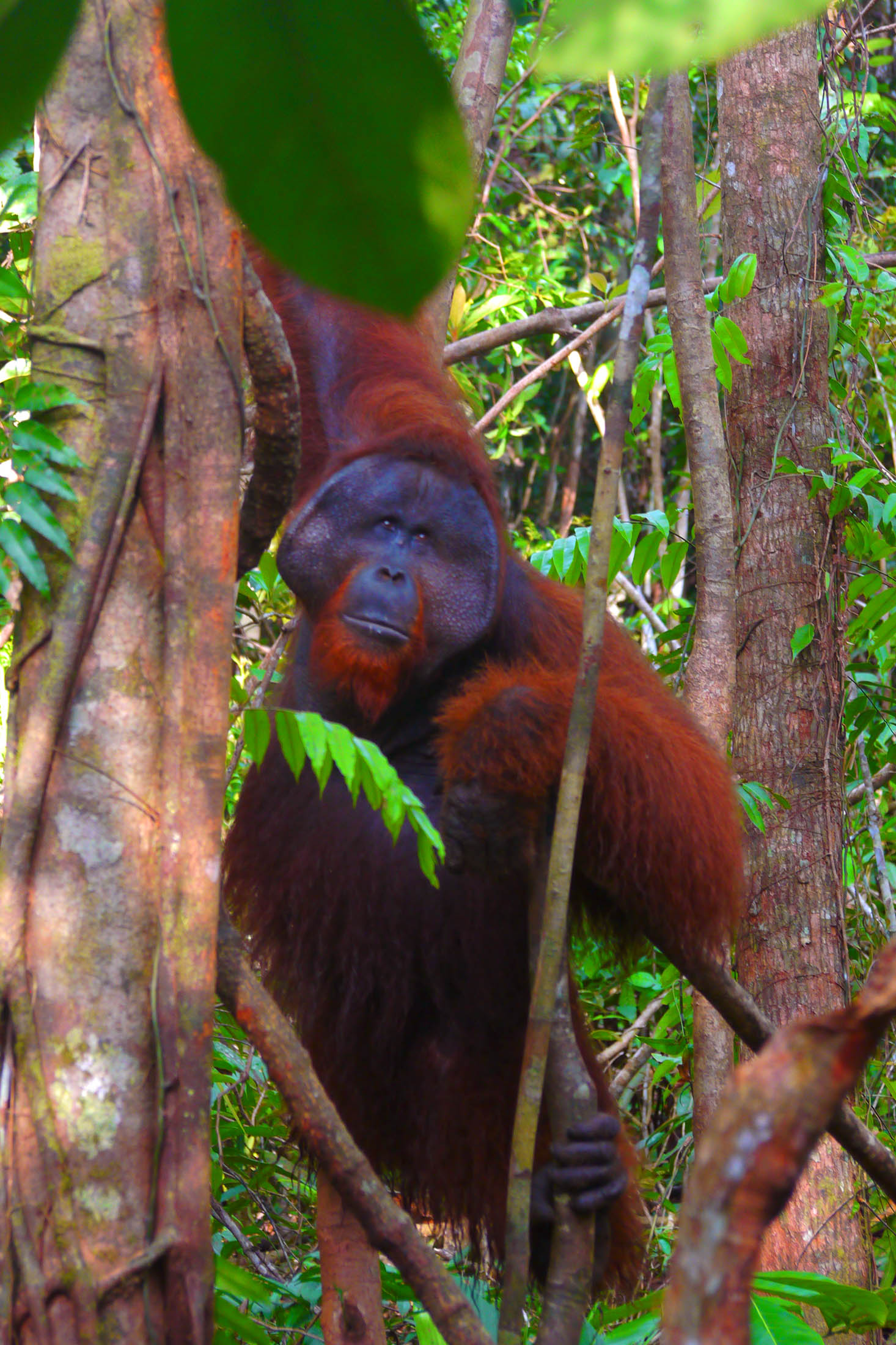
Forest Falls Inside a Protected Biosphere
Bulldozers have been at work inside a UNESCO biosphere reserve in West Kalimantan, clearing thousands of hectares of forest that conservationists had already flagged as critical habitat for the Bornean orangutan. According to reporting by Mongabay, a palm oil company has pushed ahead with land clearing despite warnings from environmental groups that the area sits within a landscape designated for its biodiversity value. The clearing is the latest sign that even formally recognized conservation zones offer limited protection against agricultural expansion.
The Bornean orangutan (Pongo pygmaeus) is listed as Critically Endangered on the IUCN Red List, the last category before extinction in the wild. The species has already lost more than half its population over the past six decades, driven largely by logging, mining, and the spread of oil palm plantations across Borneo's lowland forests. Every fresh clearing report adds urgency to a species whose range has been steadily carved into disconnected fragments.

What This Means for Orangutans on the Ground
Habitat fragmentation is not simply an inconvenience for orangutans — it is often a death sentence delivered slowly. Unlike many primates, orangutans are largely solitary and move through the forest canopy over huge home ranges, feeding on a mix of fruit, bark, and leaves that shifts with the seasons. When a plantation company cuts a corridor of forest, it does not just remove trees; it severs the arboreal pathways orangutans depend on to reach fruiting trees, forcing them to descend to the ground and cross open, hostile terrain.
That, in turn, drives the human-wildlife conflict conservation groups are warning about in this case. Orangutans pushed into fragmented remnants near plantations frequently raid crops or wander into settled areas, and the outcome is rarely good for the animal. Retaliatory killings, capture, and displacement are well-documented consequences of habitat loss on Borneo, and they compound the direct loss of forest cover.
The West Kalimantan clearing is notable because it occurred within a biosphere reserve — a designation meant to balance conservation with sustainable use, not to green-light industrial clearing. Conservationists quoted in the Mongabay report say the area had already been surveyed and identified as orangutan habitat before clearing began, raising questions about how such reserves are monitored and enforced once concessions are granted.
The Species' Wider Conservation Picture
The Bornean orangutan's crisis is not new, but it is far from resolved. Populations are now confined to fragmented patches of forest across Kalimantan, Sabah, and Sarawak, with genetic and ecological isolation compounding the threat posed by outright habitat loss. You can review the species' current status and range on its dedicated page at /species/bornean-orangutan.
Key pressures facing the species today include:
- Plantation expansion — palm oil, along with pulp and paper concessions, continues to fragment lowland forest that orangutans depend on for food and movement.
- Illegal logging and fire — even outside plantation boundaries, selective logging and human-set fires during dry seasons degrade remaining habitat.
- Human-wildlife conflict — orangutans displaced by clearing increasingly come into contact with farming communities, often with lethal consequences for the animals.
- Slow reproduction — female orangutans typically give birth only once every six to eight years, among the slowest reproductive rates of any mammal, meaning populations recover extremely slowly from losses.
- Fragmented protected areas — even reserves and biosphere zones can be undermined when enforcement lags behind concession approvals, as this case illustrates.

Why Biosphere Status Didn't Stop the Clearing
UNESCO biosphere reserves are designed around a zoning model — core conservation areas surrounded by buffer and transition zones where limited development is permitted. In principle, that structure should protect known wildlife habitat from clearing. In practice, enforcement depends on national and provincial licensing systems, and concessions granted years earlier can sometimes proceed even after habitat surveys identify sensitive species on site. Conservation groups cited in the Mongabay report argue this case exposes exactly that gap: a reserve boundary and biodiversity designation existing on paper while clearing proceeds on the ground.
Outlook: A Familiar Pattern With Real Stakes
Nothing about this case suggests the pressure on Bornean orangutan habitat is easing. Global demand for palm oil remains high, and concessions granted years ago continue to be developed even as scientific understanding of orangutan range and needs improves. Advocacy groups are calling for stronger enforcement of biosphere protections and for palm oil buyers to scrutinize supply chains more closely for links to newly cleared, high-conservation-value forest.
There is a narrow path forward. Independent monitoring, satellite-based deforestation alerts, and pressure from certification bodies and international buyers have, in other cases, slowed or reversed clearing once it draws public attention. Whether that happens here will depend on how quickly regulators and the company involved respond to the scrutiny this report has generated.
Methodology note: Species classification and status data referenced in this article are drawn from SpeciesRadar's database, which compiles IUCN Red List assessments alongside national red list records to track species status at global and local scales. Explore the full profile and conservation data for Bornean Orangutan (CR) on SpeciesRadar.
Frequently Asked Questions
What is the IUCN status of the Bornean orangutan?
The Bornean orangutan is classified as Critically Endangered, the most severe category on the IUCN Red List before a species is considered extinct in the wild.
Why does clearing inside a biosphere reserve matter more than clearing elsewhere?
Biosphere reserves are meant to protect biodiversity while allowing limited sustainable use, so clearing confirmed orangutan habitat inside one signals weak enforcement of protections that are supposed to carry extra weight.
How does habitat fragmentation affect orangutans specifically?
Orangutans rely on continuous forest canopy to move and forage; fragmentation forces them onto the ground and into contact with farmland, increasing the risk of conflict, injury, and death.
What can reduce this kind of habitat loss going forward?
Stronger enforcement of protected-area boundaries, independent deforestation monitoring, and scrutiny from palm oil buyers and certification schemes have slowed clearing in other cases and could apply pressure here.
Get weekly conservation intelligence
One short digest a week of the most striking species and country data we ship, plus breaking conservation news paired with our database where it matters.
Free, no spam. One-click unsubscribe in every email.