Bornean Orangutan: Fires Threaten Habitat
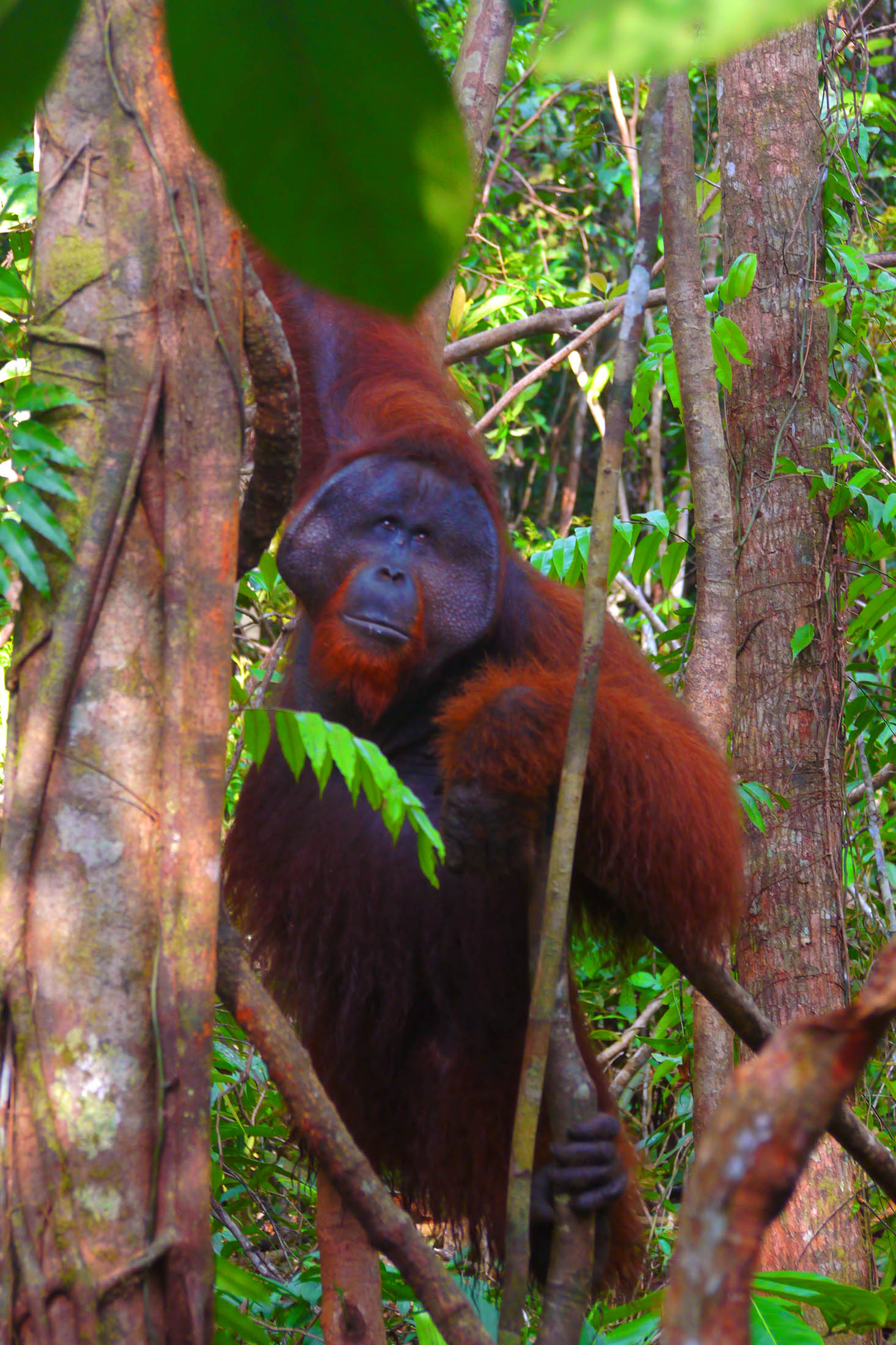
Fires Sweep Through the Orangutan's Last Strongholds
Wildfires tearing through Indonesian Borneo this year have put more than half of the world's remaining Bornean orangutans in the path of danger, according to a new assessment from the International Union for Conservation of Nature. The fires are burning across forest landscapes that hold not just scattered populations but several of the species' largest and most genetically important strongholds — the areas conservationists have long treated as the backbone of the species' survival plan.
The Bornean orangutan (Pongo pygmaeus) is already listed as Critically Endangered on the IUCN Red List, the last rung before Extinct in the Wild. Decades of logging, plantation expansion, and fragmentation have already pushed the species into isolated forest pockets across Kalimantan, Sabah, and Sarawak. What's unfolding now, according to the IUCN's reporting on this fire season, is a new and compounding pressure layered on top of that long-term habitat decline — one that doesn't just destroy trees but inflicts direct physiological harm on animals that have nowhere else to go.

Why Fire Is a Different Kind of Threat
Habitat loss from agriculture or logging tends to unfold over years, giving some populations a chance — however slim — to shift ranges or persist in fragments. Fire behaves differently. It moves fast, destroys canopy connectivity in days, and leaves behind smoke that lingers for weeks over huge swaths of forest. Orangutans caught in these smoke-choked landscapes face respiratory stress, reduced foraging ability, and heat exposure, according to the IUCN's account of this fire season. For a species that already reproduces slowly — females typically have a single offspring roughly once every six to eight years, one of the slowest reproductive rates of any mammal — any spike in mortality or health decline is difficult to reverse.
Indonesia's peatland fires are also notoriously hard to extinguish. Many ignite in drained peat soils that smolder underground, re-emerging unpredictably and spreading well beyond the areas authorities are actively fighting. That makes this year's fire season less a single event than an extended crisis moving through forest blocks that orangutan researchers have mapped for years as essential habitat.
What This Means for a Species Already on the Edge
- Compounding stress: Fire and smoke add acute physiological strain on top of chronic habitat fragmentation, a combination conservationists say is especially dangerous for a slow-breeding great ape.
- Core populations exposed: The IUCN's reporting indicates the fires are affecting areas holding some of the species' largest remaining groups, not just peripheral or already-degraded habitat.
- Limited escape routes: Decades of deforestation mean displaced orangutans often have nowhere to retreat to, since surrounding forest has already been cleared for plantations or settlements.
- Long recovery timelines: Burned peat forest can take decades to regenerate meaningfully, meaning habitat lost this season may not be viable again within an orangutan's lifetime.
Read the original IUCN-sourced reporting from Phys.org for details on the scale of this season's burning.
A Species Already Stretched Thin
The Bornean orangutan's listing as Critically Endangered reflects a population that has declined sharply over the past several decades, driven primarily by the conversion of lowland forest to oil palm and timber plantations, along with illegal logging and, increasingly, human-wildlife conflict as forest fragments shrink. Fire has periodically scarred Borneo before — most notably during severe El Niño-linked droughts — but conservationists have tracked a pattern where each major fire season leaves a smaller, more fragmented forest behind it.
Our Bornean orangutan species page tracks this Critically Endangered status alongside the broader threat picture facing the species, a profile shaped overwhelmingly by habitat conversion and fragmentation across Kalimantan and Malaysian Borneo. What fire seasons like this one add is an acute shock riding on top of that slow-moving baseline decline — the kind of layered pressure that makes population recovery dramatically harder to plan around, even where protected areas exist on paper.

What Happens Next
Fire response in Indonesia typically involves a mix of government firefighting units, local communities, and conservation organizations working to create containment lines around known orangutan habitat and rehabilitation centers. But experts have long noted that suppression efforts struggle against peatland fires that burn underground and resist conventional firefighting. The more durable fix, conservationists argue, lies in peatland restoration, stricter enforcement against illegal land clearing by fire, and maintaining forest corridors that let displaced animals move rather than become trapped in shrinking islands of habitat.
For now, the immediate priority described in IUCN's assessment is monitoring which populations have been directly affected and assessing smoke exposure in areas where orangutan density is highest. Conservation groups operating rescue and rehabilitation centers in Kalimantan are likely to see increased demand if displaced or injured animals are recovered from burned areas in the coming weeks.
Frequently Asked Questions
How endangered is the Bornean orangutan?
It is classified as Critically Endangered by the IUCN Red List, the most severe category before a species is considered Extinct in the Wild, reflecting decades of habitat loss across its Borneo range.
Why are fires especially dangerous for orangutans?
Fires destroy canopy habitat rapidly and produce smoke that causes respiratory stress and impairs foraging, compounding the slower, long-term damage from logging and plantation expansion that has already fragmented their forest range.
Are these fires unusual for Borneo?
Indonesia has experienced severe peatland fire seasons before, particularly during drought years, but this season is notable for burning through areas holding some of the species' largest remaining populations, according to IUCN's reporting.
What can be done to protect remaining habitat?
Conservationists point to peatland restoration, stronger enforcement against land-clearing fires, and maintaining forest corridors so animals can move away from burn zones rather than becoming isolated in shrinking fragments.
Get weekly conservation intelligence
One short digest a week of the most striking species and country data we ship, plus breaking conservation news paired with our database where it matters.
Free, no spam. One-click unsubscribe in every email.