Bornean Orangutan: BOSF Frees Five More
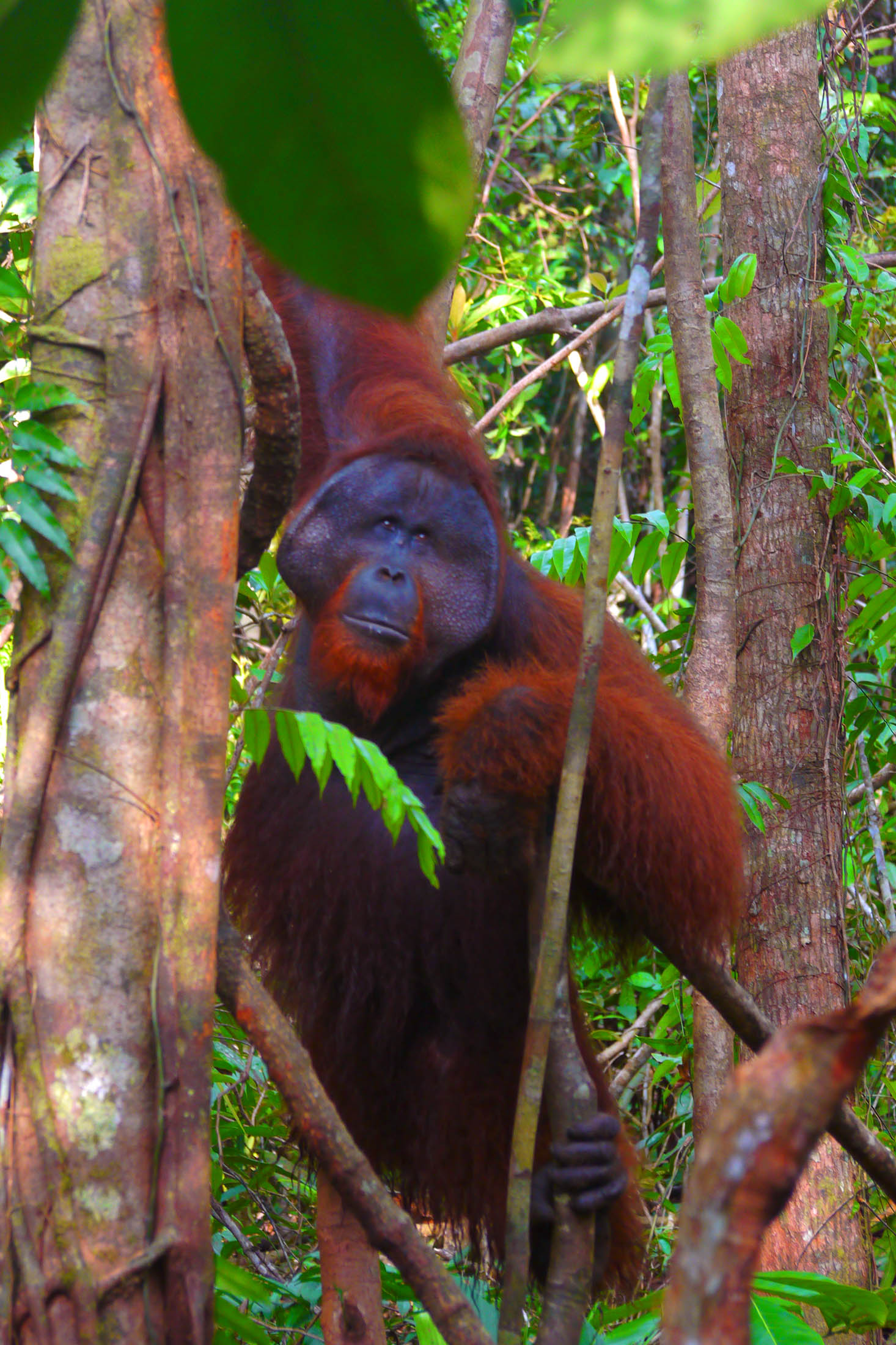
A milestone in the rainforest canopy
In June 2026, the Borneo Orangutan Survival Foundation (BOSF) carried out its 47th wild release since the organization began systematically returning rehabilitated orangutans to protected forest in 2012. Five orangutans, each cleared after years of veterinary care and forest-school training, were transported deep into Kalimantan and set free to resume life in the canopy. That single release pushed BOSF's cumulative total past 560 orangutans returned to the wild — a figure that, according to a report from The Great Projects timed to International Orangutan Day 2026, now stands as one of the largest sustained rehabilitation efforts for any great ape on Earth.
The Bornean Orangutan (Pongo pygmaeus) is classified as Critically Endangered on the IUCN Red List, the last category before Extinct in the Wild. That status alone explains why each release, even one involving just five animals, is treated as newsworthy. Every individual returned to intact forest represents years of rehabilitation work and, more importantly, a small but real contribution to a wild population that has been sliding for decades due to logging, plantation expansion, and fragmentation of lowland forest habitat. You can track the species' full profile, including its threat listing, on the Bornean Orangutan species page.

What this release actually means
Releasing an orangutan is not as simple as opening a crate door in the forest. Every one of the five individuals freed in this 47th release went through a multi-year process at BOSF's rehabilitation centers, learning or relearning the skills a wild orangutan needs to survive alone: building nests, identifying which of hundreds of forest fruits are safe to eat, navigating between trees without touching the ground, and avoiding other wildlife and human contact. Many of the orangutans in BOSF's care arrived as infants confiscated from the illegal pet trade or rescued from forest patches being cleared for agriculture, meaning they never had a wild mother to teach them these behaviors firsthand.
- Each candidate for release undergoes health screening, including checks for tuberculosis and other transmissible diseases, before being cleared to enter a wild population
- Release sites are chosen for their contiguous, protected forest cover and the absence of existing dense orangutan populations that could trigger territorial conflict
- Post-release monitoring teams track individuals, particularly in the early months, to confirm they are foraging, nesting, and ranging normally
That process explains why 560 releases across roughly fourteen years is a genuinely significant number, rather than a modest one. It reflects sustained institutional capacity — funding, veterinary staff, forest guardians, and government coordination — held together year after year, not a one-off rescue effort.
The wider picture for a Critically Endangered ape
Bornean Orangutans once ranged across most of the island of Borneo, but their distribution has contracted sharply alongside the conversion of lowland forest into oil palm and timber plantations. The species is split into several genetically distinct subspecies, and habitat fragmentation means many remaining populations are now isolated from one another, cut off by roads, rivers of cleared land, and plantation blocks that orangutans cannot safely cross. This isolation is a central concern for conservationists, because small, disconnected groups face higher risks of inbreeding and are more vulnerable to local extinction from fire, disease, or hunting.
BOSF's release program is one response to that fragmentation, but it operates alongside habitat protection efforts, anti-poaching patrols, and partnerships with the Indonesian government to secure forest concessions specifically for orangutan reintroduction. The organization's decision to mark this 47th release around International Orangutan Day is deliberate: the annual observance is used globally to draw attention to the mounting pressures facing all orangutan species, including the Bornean Orangutan's relatives, the Sumatran Orangutan and the more recently described Tapanuli Orangutan, both of which are also Critically Endangered and face even smaller wild populations confined to fragments of Sumatran forest.
Why every release still carries risk
Even a well-prepared orangutan faces genuine danger once the transport crate is opened. Newly released animals must compete for territory and food resources, and some are documented to wander outside protected boundaries into logged or agricultural land, where conflict with humans becomes a real possibility. BOSF's monitoring teams remain on alert for these outcomes, and the organization has previously reported cases where released orangutans required additional intervention after struggling to adapt. The 560-plus total is therefore not a guarantee of 560 thriving wild lives, but it does represent a substantial cohort now living, foraging, and in some cases reproducing, in protected forest rather than in cages or the illegal pet trade.
Looking ahead
BOSF has signaled it intends to continue releases as suitable habitat and rehabilitated candidates become available, though the pace depends heavily on continued funding and the availability of secure forest blocks free from encroaching development. Conservationists tracking the species broadly agree that release programs alone cannot reverse the Bornean Orangutan's decline; they must be paired with stronger protection of remaining primary forest and stricter enforcement against illegal clearing. Still, the 47th release offers a tangible marker of progress in a conservation story more often defined by loss than by return.
Methodology note: Data sourced from SpeciesRadar (speciesradar.org), drawing on IUCN Red List 2025-2 assessments and reporting from The Great Projects.
Frequently Asked Questions
How many orangutans has BOSF released in total?
As of the 47th release in June 2026, BOSF has returned more than 560 rehabilitated orangutans to protected wild forest since the program's formal start in 2012.
Why is the Bornean Orangutan classified as Critically Endangered?
The IUCN lists the Bornean Orangutan as Critically Endangered due to steep population declines driven by deforestation for logging and palm oil plantations, habitat fragmentation, and historic hunting and capture for the pet trade.
What happens to an orangutan after it is released?
Released orangutans are monitored by field teams to confirm they are nesting, foraging, and ranging successfully within protected forest, with intervention available if an individual struggles to adapt to independent life.
Are other orangutan species facing similar threats?
Yes. The Sumatran Orangutan and Tapanuli Orangutan are both also classified as Critically Endangered, with the Tapanuli Orangutan in particular confined to an extremely limited range in Sumatra.
Get weekly conservation intelligence
One short digest a week of the most striking species and country data we ship, plus breaking conservation news paired with our database where it matters.
Free, no spam. One-click unsubscribe in every email.